


Buying a custom suit online without knowing your exact size is one of the fastest ways to end up with a jacket that pulls at the shoulders or trousers that pool at the ankle. The good news: once you understand how suit sizing actually works, and you’ve taken a handful of accurate measurements, matching yourself to the right size becomes simple.
This guide walks you through our full-size charts for regular, long, and short lengths. plus exactly how to measure yourself at home, how to read a suit size label, how our US sizing compares to UK and EU sizing, and what to do if you fall between two sizes.
How to measure for a suit
For a custom-made suit, grab a soft measuring tape and, ideally, a second pair of hands. Measure over a well-fitted dress shirt, stand naturally with your arms relaxed at your sides, and keep the tape snug but not tight. No shoes, and take every measurement in inches. Follow these steps in order and jot each number down as you go.
How to measure a suit jacket
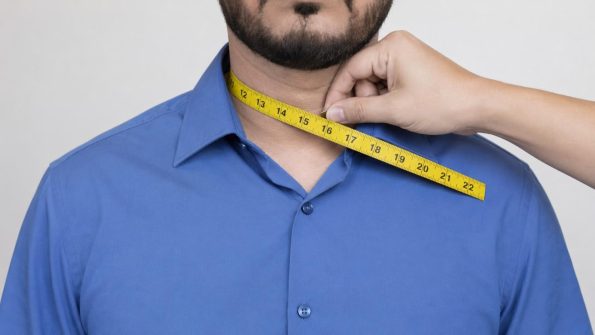
How to Measure Neck
Measure around the lower part of your neck, placing one finger between the tape and your neck for a touch of ease.
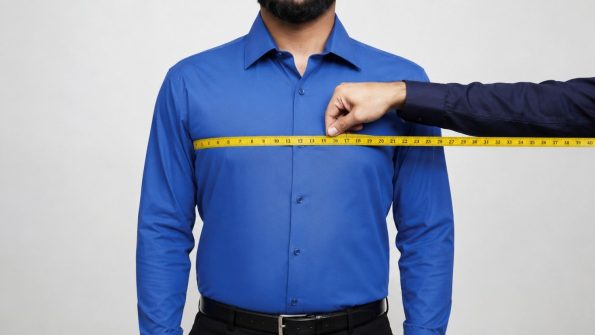
How to Measure Chest
Measure around the fullest part of your chest.
How to Measure Lower Chest
Measure around the body just below the chest. Keep the tape level all the way around and avoid holding your breath.
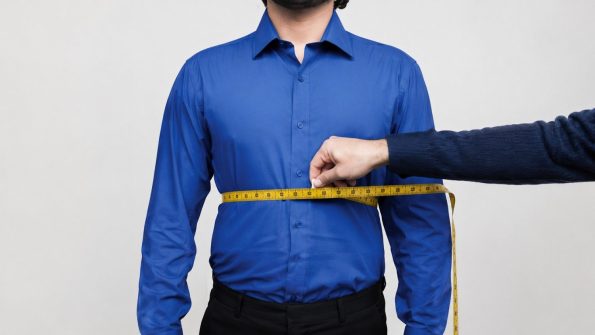
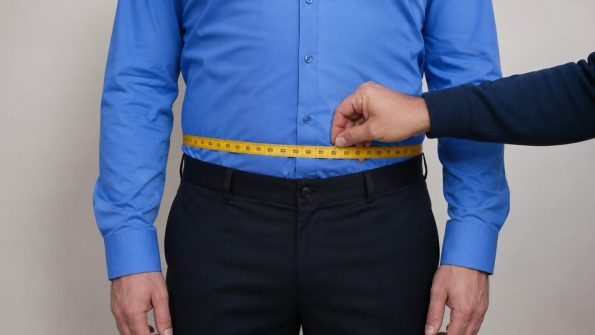
How to Measure Jacket Stomach/Waist
Measure around the fullest part of your waist, stomach, or belly. This helps make sure the jacket closes comfortably without pulling.
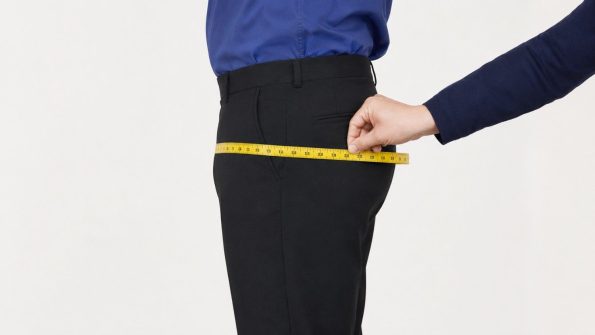
How to Measure Hips/Seat
Measure around the fullest part of your hips and seat. Keep the tape straight and level for an accurate fit through the lower jacket area.
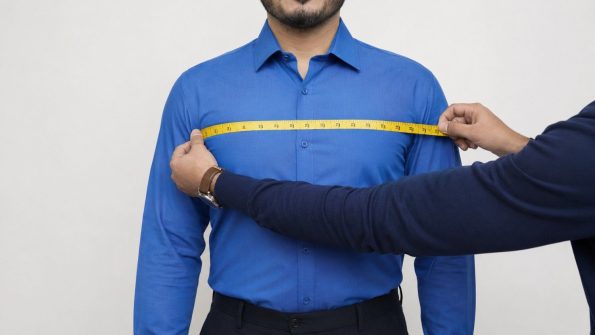
How to Measure Front Chest Width
Start at the front of your right armpit and measure straight across the chest to the front of your left armpit. Do not wrap the tape around the body for this measurement.
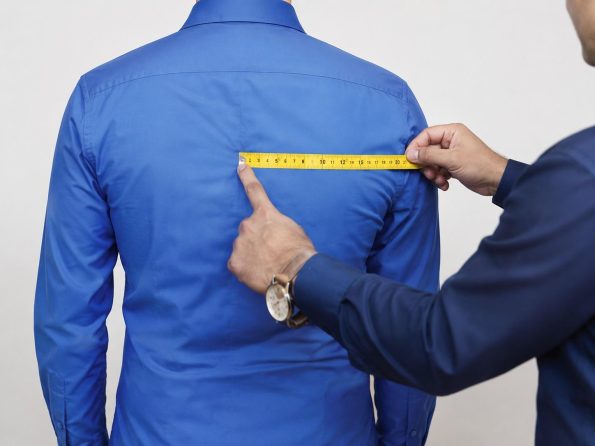
How to Measure Cross Back
Measure across the back from one armhole area to the other, passing over the shoulder blades. Keep the tape straight and level.
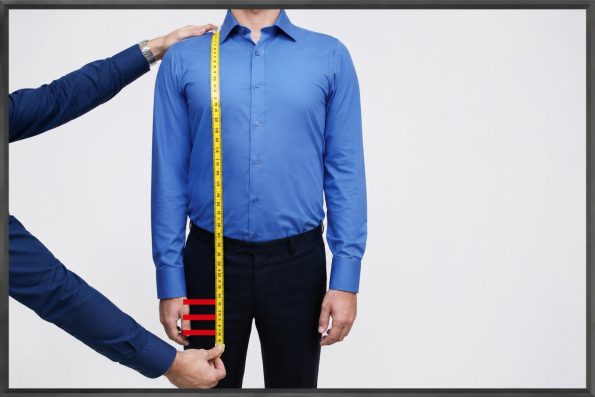
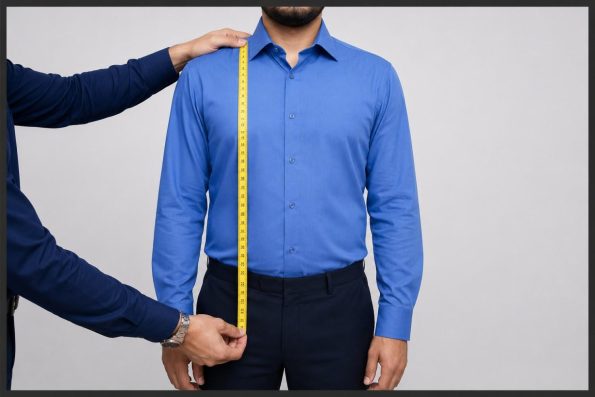
How to Measure Front Jacket Length
Measure from the highest point of your shoulder, near the base of the neck, straight down to where you want the jacket to end. A classic suit jacket usually ends around the lower seat or near the thumb knuckle when your arms are relaxed.
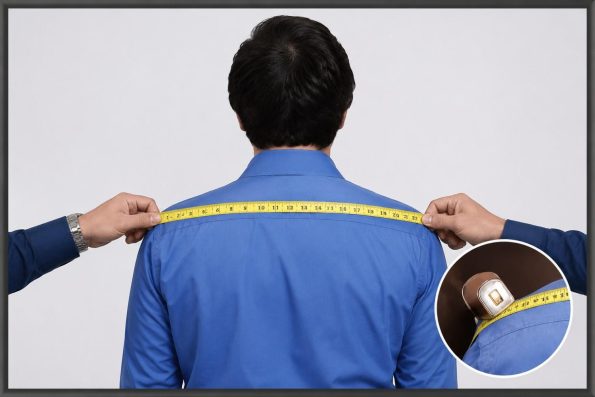
How to Measure Shoulder Width
Wearing your best-fitting shirt, measure from shoulder seam to shoulder seam across your back. This helps create the correct jacket structure across the shoulders.
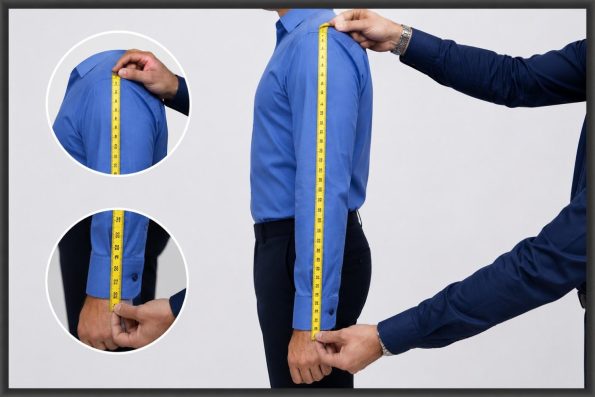
How to Measure Sleeves
Measure from the shoulder seam down to your wrist. Keep your arm relaxed at your side for the most accurate sleeve length.
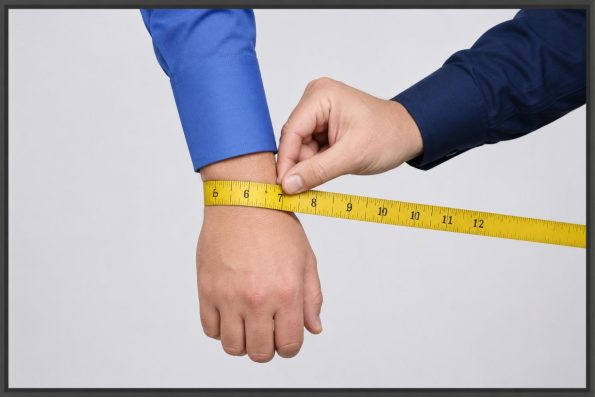
How to Measure Wrist
Measure around your wrist bone. This helps determine the correct cuff opening.
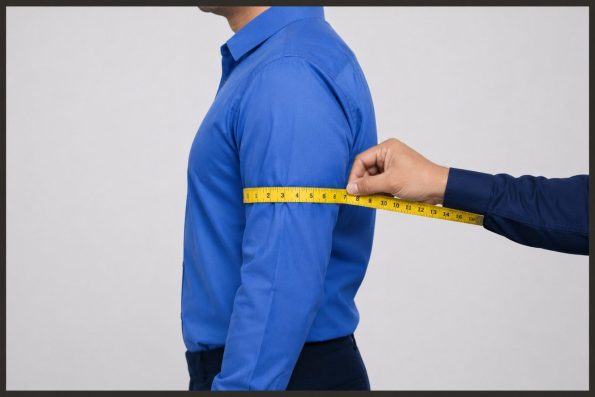
How to Measure Biceps
Measure around the fullest part of your biceps. Keep your arm relaxed and do not flex while measuring.
How to Measure Half-Back Length
Measure from the base of the back of your neck straight down to the natural waistline or to the jacket length point required by your measurement form.
How to Measure for a Waistcoat
Waistcoat Length – Measure from your shoulder bone down to just below the waistline, where you’d normally fasten your trousers.
How to Measure for Suit trouser
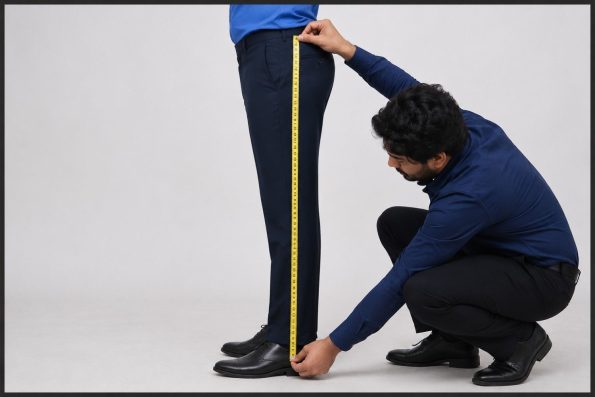
How to Measure Trouser Outseam
Measure from the top of your waistband down to your ankle along the outside of your leg.
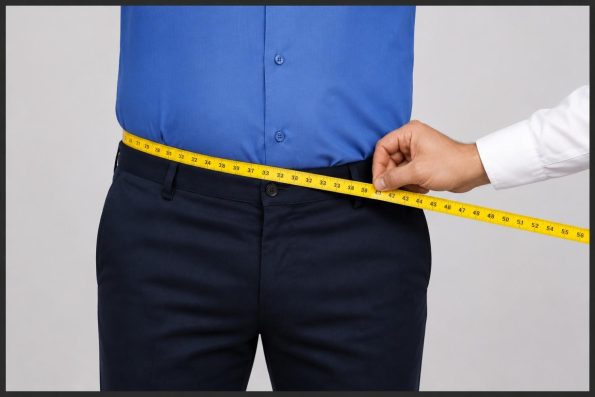
How to Measure Trouser Waist
Measure around your waist at the level where you’d normally wear your belt.
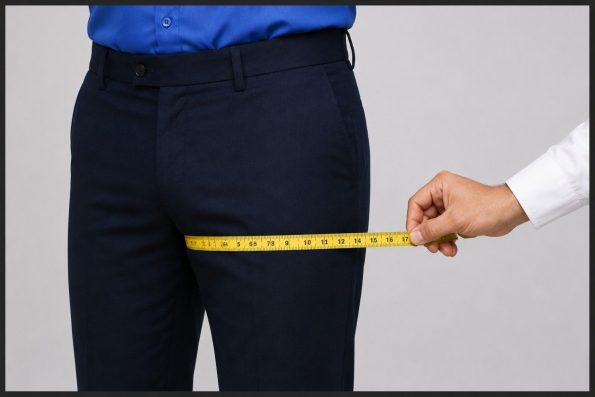
How to Measure Thigh
Measure around your thigh at its widest point.
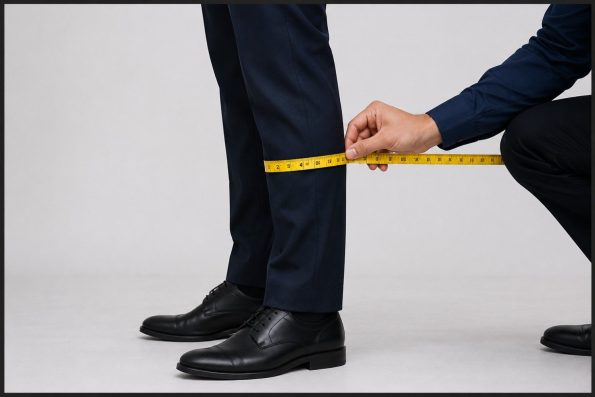
How to Measure Knee
Measure around your knee at its widest point.
Bottom Opening – Measure around the ankle area or choose your preferred trouser hem opening.
Trouser Inseam – Measure from the crotch seam down to the bottom of the ankle or your desired trouser length.
A final reminder before you start: Keep the tape snug against the body, but not tight. You should be able to breathe naturally while measuring. Stand up straight, skip the shoes, and record every number in inches. Getting these measurements right helps create a better-fitting custom suit, waistcoat, and trousers while reducing the need for major alterations. It helps create a better-fitting custom suit and reduces the need for major alterations.
Men’s suit Size Chart: Regular, Long, and Short Lengths
All measurements below are in inches. Each chart maps the numeric/letter size to five key jacket measurements: chest width, waist width, shoulder width, sleeve length, and jacket length.
Regular Length
| Regular Length | XXS 32 | XS 34 | S 36 | M 38 | M/L 40 | L 42 | XL 44 | XXL 46 | 3XL 48 | 4XL 50 |
|---|---|---|---|---|---|---|---|---|---|---|
| Chest width | 19.4 | 20.2 | 21 | 21.8 | 22.6 | 23.4 | 24.2 | 25 | 25.8 | 26.6 |
| Waist width | 17 | 17.8 | 18.6 | 19.2 | 20 | 20.8 | 21.6 | 22.4 | 23.2 | 24 |
| Shoulder width | 17 | 17.4 | 17.8 | 18.2 | 18.6 | 18.8 | 19.2 | 19.6 | 20 | 20.4 |
| Sleeve length | 24.2 | 24.4 | 24.8 | 25.2 | 25.6 | 26 | 26.2 | 26.4 | 26.6 | 26.8 |
| Jacket length | 29.2 | 29.6 | 30 | 30.4 | 30.8 | 31.2 | 31.4 | 31.8 | 32.2 | 32.6 |
Long Length
| Long Length | S 36L | M 38L | M/L 40L | L 42L | XL 44L | XXL 46L | 3XL 48L | 4XL 50L |
|---|---|---|---|---|---|---|---|---|
| Chest width | 20.8 | 21.6 | 22.4 | 23.2 | 24 | 24.8 | 25.6 | 26.4 |
| Waist width | 18.2 | 18.8 | 19.6 | 20.4 | 21.2 | 22 | 22.8 | 23.6 |
| Shoulder width | 17.8 | 18.2 | 18.6 | 18.8 | 19.2 | 19.6 | 20 | 20.4 |
| Sleeve length | 25.8 | 26.2 | 26.6 | 27 | 27.2 | 27.6 | 28 | 28.4 |
| Jacket length | 31.2 | 31.4 | 31.8 | 32.2 | 32.6 | 33 | 33.4 | 33.8 |
Short Length
| Short Length | S 36S | M 38S | M/L 40S | L 42S | XL 44S | XXL 46S | 3XL 48S | 4XL 50S |
|---|---|---|---|---|---|---|---|---|
| Chest width | 21 | 21.8 | 22.6 | 23.4 | 24.2 | 25 | 25.8 | 26.6 |
| Waist width | 18.6 | 19.2 | 20 | 20.8 | 21.6 | 22.4 | 23.2 | 24 |
| Shoulder width | 17.8 | 18.2 | 18.6 | 18.8 | 19.2 | 19.6 | 20 | 20.4 |
| Sleeve length | 23.8 | 24.2 | 24.6 | 25 | 25.2 | 25.4 | 25.6 | 25.8 |
| Jacket length | 28.4 | 28.8 | 29.2 | 29.6 | 30 | 30.4 | 30.8 | 31.2 |
US, UK, EU Size Conversion
We use US sizing across all of our charts above (the same numbering as UK menswear, since US and UK jacket sizes are identical). If you’re used to shopping in European sizes, use the table below to convert your US/UK size to EU sizing:
| US / UK | EU |
|---|---|
| 34 (XS) | 44 |
| 36 (S) | 46 |
| 38 (M) | 48 |
| 40 (M/L) | 50 |
| 42 (L) | 52 |
| 44 (XL) | 54 |
| 46 (XXL) | 56 |
| 48 (3XL) | 58 |
| 50 (4XL) | 60 |
A quick way to remember it: EU sizes run 10 numbers higher than US/UK. A US 40 is an EU 50, a US 42 is an EU 52, and so on. The underlying body measurements don’t change; only the label does, so the underlying body measurements do not change; only the label changes. Always cross-check your body chest measurement with the suit size label first, then review the garment measurements in the chart to understand the finished jacket fit. Do not rely on a country conversion chart alone, because brand cuts can vary. Brand cuts vary enough between regions that a conversion chart should be treated as a starting point, not a guarantee.
Slim, Tailored, or Regular: Choosing a Cut
Beyond size and length, the suit cut also affects how the jacket feels and looks.
Slim Fit
A closer, more tapered silhouette through the chest and waist. Best for leaner builds or anyone who wants a sharper modern shape.
Tailored Fit
A balanced fit with slightly more room than Slim Fit while still keeping a clean shape through the body.
Regular Fit
A classic fit with more room through the chest, waist, and arms. Best for comfort and easier movement.
Your ideal cut depends on both your body shape and your personal style. If you are between two fits, choose the one that gives you better comfort across the shoulders and chest.
How André Emilio Helps Create a Better Fitting Custom Suit
We go beyond basic size charts to create a suit that fits your actual body shape. Along with your custom measurements, we may ask for front and back body photos so our tailoring team can better understand your posture, shoulder shape, body balance, and overall structure. This helps us adjust the suit more accurately so it sits cleanly on your frame. We also collect details such as your weight and full body length, giving us a clearer picture of your proportions before production begins. These extra steps help us create a custom suit that fits your body with greater precision.
Frequently Asked Questions
- Can I Measure Myself For A Custom Suit?
You can take some measurements yourself, but having another person help will give you more accurate results, especially for the shoulders, sleeves, cross back, jacket length, and trouser inseam. Stand naturally and avoid twisting or stretching while being measured.
- How Tight Should The Measuring Tape Be?
The tape should sit snugly against your body without squeezing it. You should be able to breathe normally and remain relaxed. Do not pull the tape tight or leave it loose, as either can affect the final fit.
- Should I Add Extra Room To My Measurements?
No, Record your exact body measurements without adding extra inches for comfort or movement. Our tailoring team will add the appropriate fitting allowance based on your selected fit and suit style.
- What Should I Do If I Fall Between Two Suit Sizes?
Choose the size that gives you enough room across the shoulders and chest, as these areas are more difficult to alter. Then compare the waist, sleeve, and jacket length measurements in the size chart before making your final choice.

