


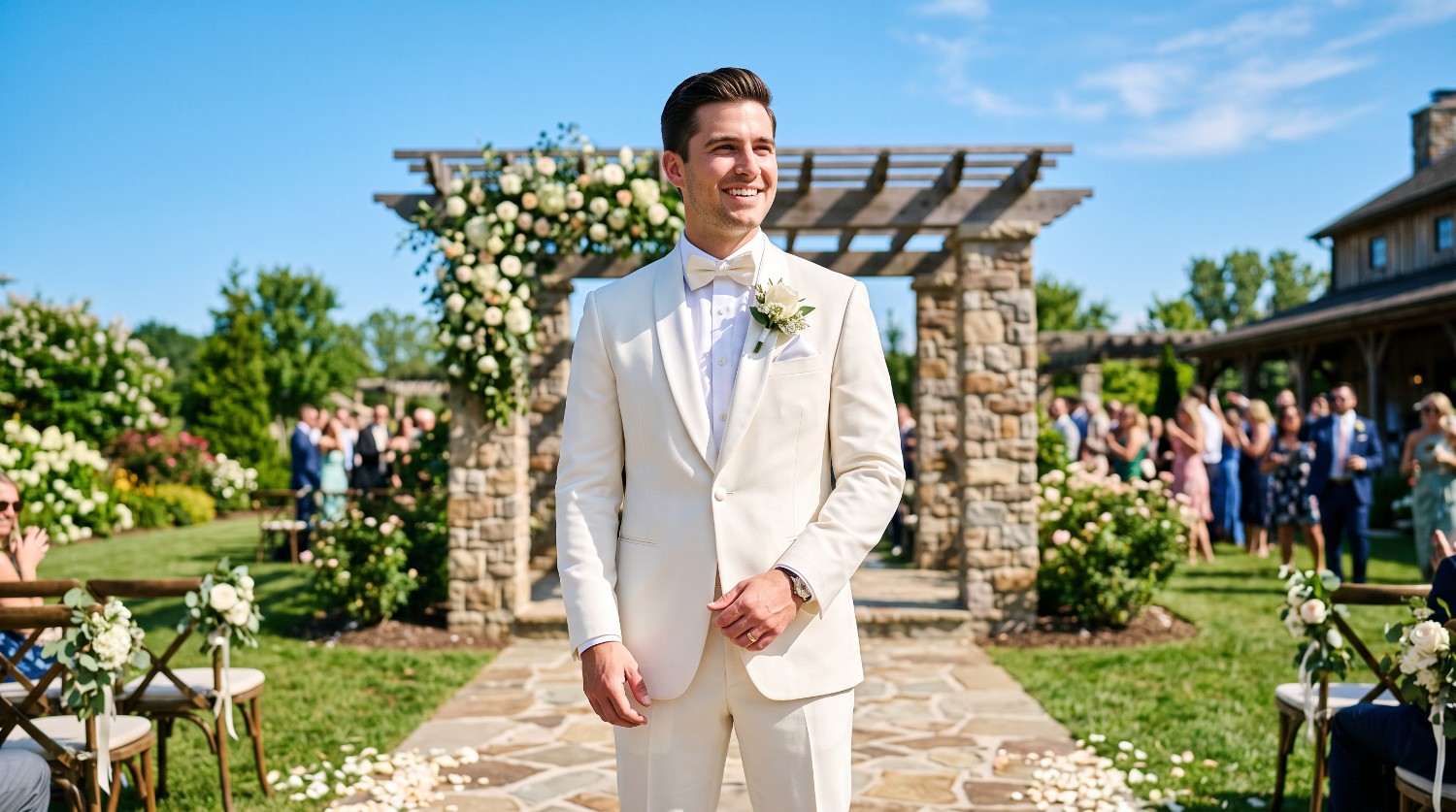
A wedding tux needs to get you through a surprising amount of photos. You’ll be standing for ceremony, sitting through dinner, greeting family and friends, and even busting out a dance move or two. It needs to feel pulled together all day and be comfortable enough not to factor into your decisions.
Custom design lets you build something entirely around you. The quality of a custom suit relies on how well the measurements, pattern, fabric, construction, and resulting fit work together, and understanding that process will only help you feel comfortable picking out the right wedding tux and asking questions before submitting your order.
A bespoke wedding tuxedo is a one-off garment created to your individual measurements and custom style preferences. Begin with the dress code and progress through to the material, the chosen lapels, the colour and the silhouette. Getting the fit right is of as much importance as the styling. Ensure the estimated order time is correct with time for alterations prior to the wedding day.
What Does “Custom Wedding Tuxedo” Mean?
Custom describes a broad category, so it is worth asking what a particular service includes. Made-to-measure generally adapts an existing pattern to your measurements. Bespoke typically involves an individually developed pattern and a more extensive fitting process. Both can produce a well-fitting garment, but the terms do not describe an identical service.
Enquire about the measurements, how they are applied, what measurements can be modified, what kind of fitting support you are offered and what is done in case the end product is to be altered. A selection of lapels and lining, by itself, will not fully communicate what level of personalisation has been offered to the fit.
As you explore custom tuxedos for your wedding, compare the details that matter to your day: the shape of the jacket, the trouser cut, the fabric specification, and what the package includes.
How Custom Tailoring Creates the Fit
1. Measurements establish the starting point
Your usual jacket size cannot describe every part of your build. Two men who wear the same size may have different shoulder widths, waist proportions, or sleeve lengths.
Follow the maker’s measurement instructions exactly. Do not tighten the tape to request a slim fit or add extra inches to create comfort. Record the measurements as instructed and discuss your preferred fit separately. Andre Emilio’s guide to measuring yourself for a custom tuxedo explains the measurements to collect and how to prepare.
2. The pattern turns measurements into proportions
A pattern translates those measurements into the shapes that will be cut from cloth. It also accounts for wearing ease: the room needed to breathe, sit, and move.
This is why “slimmer” does not automatically mean “better fitted”. Taking in the waist cannot correct every issue elsewhere in the jacket. Explain where you usually experience problems, whether that is a loose collar, restricted thighs, or sleeves that never seem to sit comfortably.
3. Fabric and construction influence the finished shape
The same design can look and feel different in different clothes. Fabric weight and texture affect the way the jacket hangs; the internal structure helps support its shape.
Canvas is an internal layer used to shape a tailored jacket. Full-canvas construction extends through the jacket front, while half-canvas construction concentrates it in the upper front. Fused construction uses bonded interlining. Ask which construction applies to the specific tuxedo you are considering rather than assuming every custom garment is made the same way.
Construction is one part of the decision. It should be considered alongside fit, fabric, intended use, and budget.
4. The finished garment needs a fit check
When the tuxedo arrives, try on the complete outfit. Wear the intended shirt and shoes, and inspect the front, side, and back. Check how it feels sitting and walking as well as standing.
Flag concerns promptly and ask the maker to assess them before arranging alterations. A clear description and photographs are more useful than saying the tuxedo simply feels “off”.
Start With the Wedding’s Dress Code
For a traditional black-tie wedding, a black or midnight-blue tuxedo with a white formal shirt and black bow tie provides a dependable starting point. Peak and shawl lapels both belong in classic eveningwear.
If the wedding allows creative formal wear, you have more room to introduce colour or texture. Agree on that direction with your partner before building the outfit around it. A casual daytime wedding may suit a tailored suit better than a tuxedo.
Choose the level of formality first. Let the venue, season, and wedding palette refine that decision rather than override it.
If you are still deciding on your overall look, our guide to how to choose a wedding tuxedo can help you narrow the options before settling the details of your custom order.
Choose Fabric for the Conditions You Will Wear It In
Think about the actual schedule: an outdoor ceremony, an air-conditioned reception, or several hours moving between both. Ask to see fabric swatches where possible and discuss weight and breathability with the maker.
Wool barathea is a traditional eveningwear cloth with a subtly textured surface. Other wool weaves offer different finishes, while velvet creates a more pronounced texture. The right choice depends on the look and wearing conditions you want.
Ask for the fibre composition and fabric weight rather than judging by a photograph or premium label alone. Review the lapel facing alongside the main fabric, too. A combination that looks balanced in a small image may feel much more contrasting in person.
Decide on Lapels, Colour, and a Waistcoat
Choose a few details that work together. You do not need to personalise every available feature to make the tuxedo feel like yours.
| Decision | What It Changes | How to Choose |
|---|---|---|
| Peak or Shawl Lapel | The visual character of the jacket front. | Compare an angular peak with a curved shawl on otherwise similar designs. |
| Black or Midnight Blue | A classic eveningwear foundation. | Consider the full outfit and the lighting in which you will wear it. |
| More Distinctive Colour | Makes colour a central part of the look. | Use it when the agreed dress code allows it; keep the surrounding details restrained. |
| Waistcoat or No Waistcoat | Adds a layer and changes the visible shirt area. | Consider comfort, jacket styling, and whether the waistcoat is cut for eveningwear. |
| Personal Lining or Monogram | Adds a discreet personal detail. | Choose something meaningful after settling the visible proportions and fit. |
If you want a waistcoat, assess it with the jacket and trousers together. Ask how its neckline and length work with the shirt front and trouser rise. A three-piece package is not, by itself, a guarantee that every detail follows traditional black-tie styling.
Found Your Wedding Style?
Choose your lapel, colour, fabric and personal details to create a tuxedo that feels distinctly yours.
Shop Custom Wedding TuxedosBuild the Shirt and Accessories Into the Outfit
The shirt affects the visible neckline and cuffs, so choose it before the final try-on. A white formal shirt keeps the combination clear and versatile. Check whether the front uses studs, visible buttons, or a covered placket, and whether the cuffs require cufflinks.
Compare the available custom tuxedo shirts with your chosen jacket rather than treating the shirt as an unrelated purchase.
For a classic outfit, start with a black bow tie, a white pocket square, and polished black formal shoes. Add accessories selectively. The lapels, shirt front, and face should remain easy to read as one composition.
Check Comfort as Carefully as Appearance
Use these checks during the final try-on:
- Collar: It should sit against the shirt collar without a conspicuous gap or uncomfortable pressure.
- Shoulders: Look for a clean line without obvious collapse or pulling at the sleeve head.
- Jacket front: With the appropriate button fastened, check for pronounced strain and lapels that buckle away from the chest.
- Sleeves: Compare both sides with your arms resting naturally and check the amount of shirt cuff showing.
- Trousers: Check the seat, thighs, and waistband while seated, then inspect the hem over your wedding shoes.
Practical fit tip: Spend a few minutes wearing the whole outfit before deciding that it is ready. Sit at a table, walk, and reach forward as you would to greet someone. Tell the maker where movement feels restricted instead of requesting that everything be made looser.
Plan the Budget and Order Timeline Together
Request a quote for the complete outfit. Clarify whether it includes the waistcoat, shirt, accessories, delivery, taxes, and any adjustment support. Compare like-for-like packages rather than jacket-and-trouser prices against complete ensembles.
Custom is most compelling when you value fit choices, specific design details, and owning the garment for future use. A rental or an altered ready-made tuxedo may be more practical for a tighter budget or a short deadline. The decision should reflect your priorities.
Work backward from the date you need the finished outfit in hand, especially if you are travelling. Include time for measurement review, production, delivery, a complete try-on, and any necessary adjustments. Ask the maker to confirm the current schedule for your order instead of treating a general delivery estimate as your entire wedding preparation window.
Planning Your Wedding Tuxedo? Let’s Get the Details Right.
Bring your wedding date, dress code and inspiration. We’ll help you work through fit, fabric, lapels, colour and finishing details.
Book a Groom ConsultationYour Custom Wedding Tuxedo Checklist
Before placing the order, make sure you can answer these questions:
- Does the design match the agreed wedding dress code?
- Have you confirmed the fabric, colour, lapels, and package contents?
- Have you submitted measurements using the maker’s instructions?
- Have you explained your fit preferences and any recurring fit problems?
- Do you know the total cost, expected arrival date, and adjustment process?
- Will the shirt and shoes be available for the final try-on?
Ready to Create Your Wedding Tuxedo?
Bring your wedding date, style decisions and reference images to an André Emilio groom and wedding-party consultation. A clear brief makes it easier to create a tuxedo that fits both you and the occasion.
Book Your Groom Consultation
