


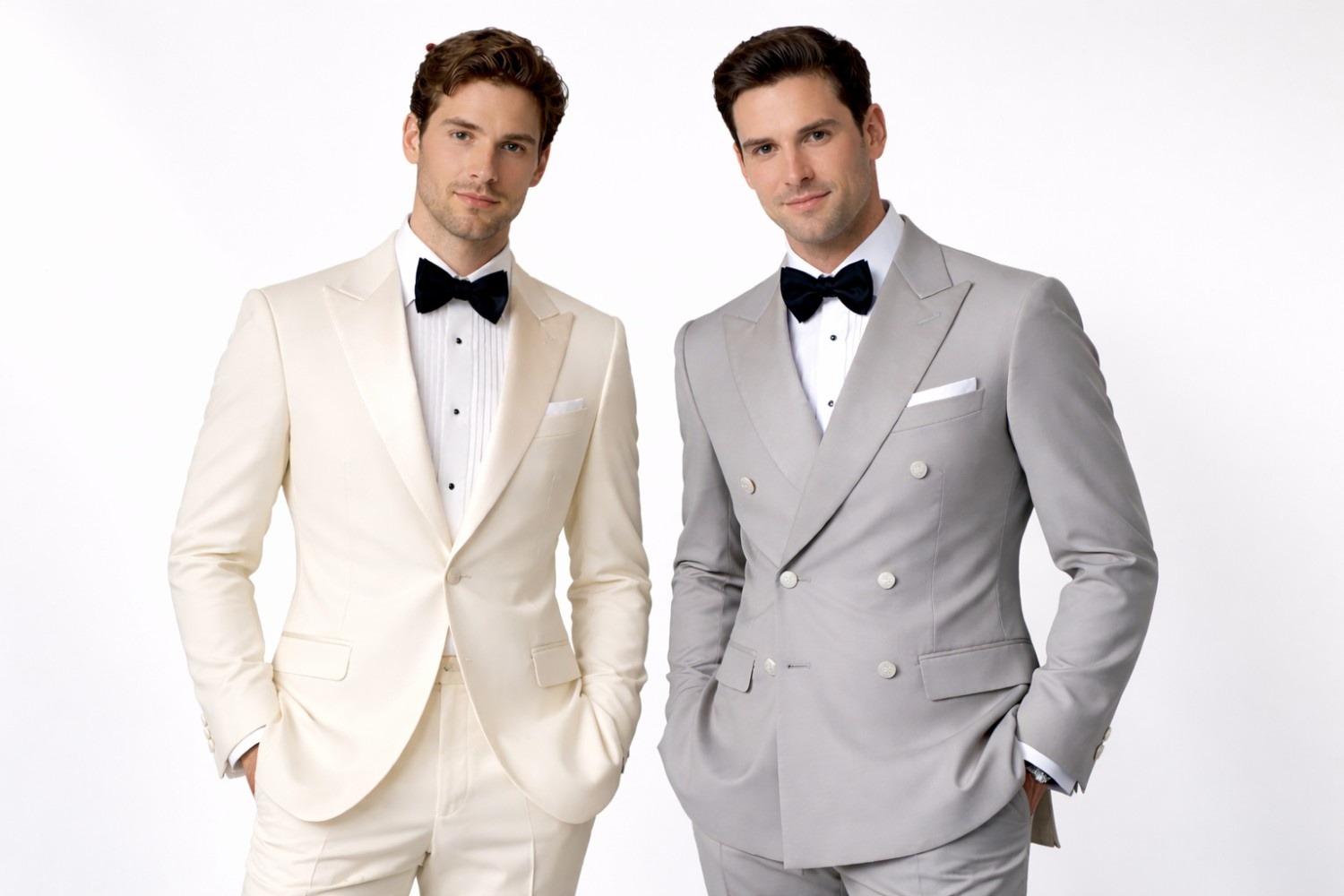
When you are shopping for a tuxedo, the first big decision you need to make is the cut. Do you go with a single-breasted tuxedo or a double-breasted one? Both are appropriate for formal occasions, but they look and feel quite different on the body.
This is not the same as choosing between single and double-breasted suits in everyday wear. Tuxedos come with stricter rules around lapel style, button count, and how they should be worn. Getting this right matters if you want to look polished and appropriate at your next formal event.
In this guide, we break down both styles in detail so you can make the right call.
What Is a Single-Breasted Tuxedo?
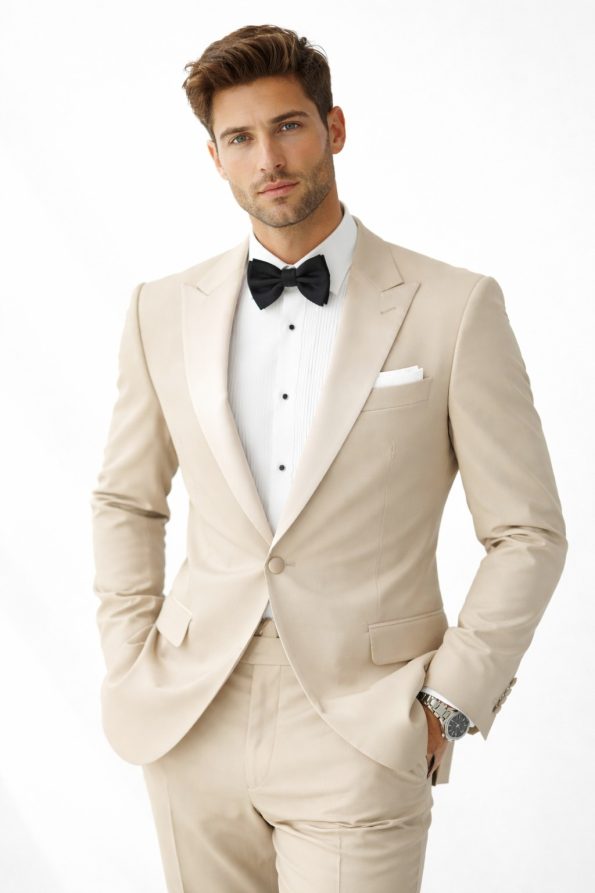
A single-breasted tuxedo has a single row of buttons down the center front of the jacket. The two front panels meet cleanly in the middle with no overlap. It is the most widely worn tuxedo style at formal events around the world.
Most people picture a single-breasted tuxedo when they think of black tie. It is the standard, the safe choice, and for good reason. It works on almost every body type, fits well off the rack, and stays appropriate no matter how formal or how relaxed the event is.
Button Count
Here is something that surprises many first-time tuxedo buyers. A single-breasted suit might have two or three buttons, but a single-breasted tuxedo traditionally has just one. That one button sits right at the natural waist. It pulls the jacket in, creates a clean vertical line, and keeps the whole look sharp from top to bottom. Some modern versions use two buttons, but one is the correct configuration for proper black tie.
Lapel Options
The single-breasted tuxedo works with two main lapel styles:
- Shawl collar: A smooth, rounded lapel with no notch. This is the most traditional option and the one most closely associated with the classic dinner jacket look. It has a clean, unbroken line from collar to button.
- Peak lapels: Pointed lapels that extend upward toward the shoulders. These add a sharper, more structured look to the jacket without crossing into double-breasted territory.
One thing to avoid: notch lapels. These are the standard lapel on most business suits and they are considered too casual for a proper tuxedo. A tuxedo should have satin or grosgrain trim on the lapels, and notch lapels break the visual flow of that detail.
Silhouette
The single-breasted cut creates a straight, clean line from the shoulder down to the hem. This makes you look taller and leaner, without adding bulk anywhere. It is one of the most body-friendly jacket cuts in menswear because it does not add width or volume anywhere it should not.
Waist Coverings
One practical advantage of the single-breasted tuxedo is that you can wear a waist covering with it. A cummerbund, which is a wide pleated satin waistband, covers the trouser waistband neatly. A matching waistcoat works too. These options are only available with the single-breasted cut, and we will explain why when we get to the double-breasted section.
Who Should Wear a Single-Breasted Tuxedo?
Best Body Types
The single-breasted tuxedo is genuinely flattering on most builds. Some specific cases where it works especially well:
- Slim and lean builds: The clean center line works with a lean frame without making it look too narrow.
- Average builds: The single button pulls in at the waist and gives structure to the jacket, even without a particularly athletic frame.
- Shorter men: This is where the single-breasted tuxedo does its best work. The vertical button line draws the eye upward, adds perceived height, and avoids adding any horizontal bulk that would make a shorter man look wider.
Best Occasions
The single-breasted tuxedo is the expected and correct choice for:
- Strict black-tie events such as galas, awards ceremonies, and charity dinners
- Formal weddings, especially if you are a guest and want to dress appropriately without standing out too much
- Any formal evening occasion where you are unsure of the exact dress code
If you are not sure which style to wear, always go single-breasted. You will not be overdressed, you will not be underdressed, and you will always look appropriate.
First-Time Buyers
If this is your first tuxedo purchase, single-breasted is the right starting point. It fits better off the rack than a double-breasted jacket, needs fewer alterations, and will work across a much wider range of occasions over the years.
How to Style a Single-Breasted Tuxedo
Fabric
Fabric choice has a real impact on how the jacket sits and moves.
- Barathea wool: Finely woven and matte in finish. This is the standard fabric for tuxedos and works perfectly with the clean lines of the single-breasted cut.
- Midnight blue wool: A sharp alternative to classic black. Under artificial evening light, midnight blue actually reads darker than black, making it a sophisticated and slightly unexpected option.
- Velvet: Works well for cooler months and evening events. Velvet tuxedo jackets are almost always single-breasted, which makes this fabric a particularly strong match for this cut.
- Lightweight wool blends: A practical option for summer weddings or warm-weather events.
Shirt
The right shirt for a black-tie tuxedo is a formal dress shirt with a pleated bib front and stud closure. Studs are the small decorative fasteners that replace standard buttons on formal shirts. French cuffs with cufflinks are the standard. A plain white poplin shirt is acceptable if you do not have a pleated bib shirt, but the bib front is more correct for proper black tie.
Waist Covering
You have three options with a single-breasted tuxedo:
- Cummerbund: Black satin, pleats facing upward. This is the most traditional pairing and the one that reads most formally.
- Waistcoat: A more structured option that pairs well with the jacket. Should match the fabric of the tuxedo.
- No covering: A clean, modern approach that works when both the shirt and trousers fit well.
Bow Tie, Shoes, and Pocket Square
Always tie your own bow tie. Pre-tied clip-on bow ties are considered poor form at black-tie events. Black satin or grosgrain are both correct. For shoes, patent leather Oxford cap-toes are the standard pairing. Opera pumps, which are black leather shoes with a small bow, are the most formal option. For the pocket square, keep it simple: white linen or silk in a flat fold.
What Is a Double-Breasted Tuxedo?
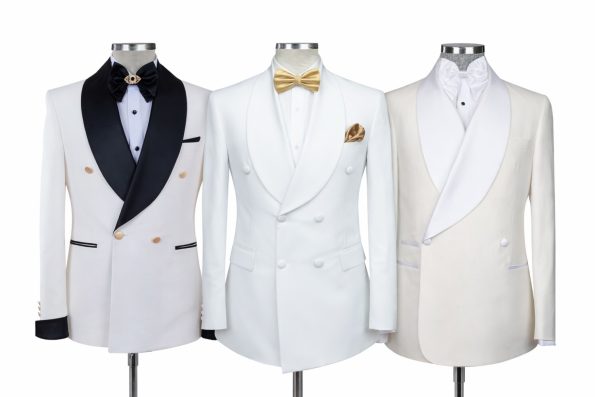
A double-breasted tuxedo has a wide overlapping front panel. The left side of the jacket crosses over the right and is fastened by two parallel rows of buttons. This extra fabric gives the jacket a broader, more structured look than the single-breasted cut.
The double-breasted tuxedo is not the standard choice at most formal events. It is a more intentional style decision. When it fits well and suits the wearer, it looks genuinely sharp. When it does not fit well, it can look bulky and off. The difference between a good and bad double-breasted tuxedo comes down almost entirely to fit.
Button Count
Regular double-breasted suits typically use four or six buttons. A double-breasted tuxedo is more restrained. Two or four buttons is the correct configuration. The functional buttons, the ones you actually fasten, are usually just two. This keeps the front panel secure without making the jacket look overly busy.
Link Button in a Double-Breasted Suit
A link button, also called a jigger button, is a small hidden button sewn on the inside of a double-breasted jacket. It connects the two front panels from the inside, keeping the jacket flat and properly aligned. Without it, the inner panel shifts around, causing the jacket to pull and bunch at the front. You should always fasten the link button first, before securing any of the outer buttons. It is a small detail, but it is what keeps a double-breasted suit looking sharp and structured throughout the day.
Lapels
Peak lapels are the standard pairing for a double-breasted tuxedo. The pointed tips of the peak lapel complement the strong, structured lines of the overlapping front. Together they draw the eye upward toward the shoulders and create a defined shape across the chest. Shawl collars rarely work on a double-breasted jacket because the soft, rounded shape of the collar works against the sharp, angular structure of the front.
The Closed Jacket Rule
This is one of the most important rules for wearing a double-breasted jacket, and one that gets broken regularly. A double-breasted tuxedo should stay buttoned at all times. The overlapping front panel only looks correct when it is fastened. An unbuttoned double-breasted jacket looks unfinished and loses the entire point of the cut. If you find yourself wanting to unbutton the jacket frequently, a single-breasted tuxedo is probably the better choice for you.
No Waist Covering Needed
The overlapping front panel of the double-breasted jacket naturally covers the trouser waistband. There is no gap to fill, which means a cummerbund or waistcoat would be hidden underneath the jacket and serve no purpose. This also simplifies your accessory decisions considerably.
Who Should Wear a Double-Breasted Tuxedo?
Best Body Types
- Athletic and broader builds: The structured overlapping front and peak lapels work well with wide shoulders. The jacket adds definition at the waist and creates a strong, proportional shape.
- Taller men: The extra fabric and structure fill a longer frame without looking heavy. On a tall man, the double-breasted cut reads as composed and deliberate.
- Shorter men: The conventional advice is to avoid the double-breasted cut if you are shorter, because the horizontal elements of the overlapping front can reduce the appearance of height. That said, a shorter man in a well-fitted, properly proportioned double-breasted tuxedo can absolutely wear it. The critical factor is fit. Off the rack will almost never work. Made to measure or bespoke is the only reliable path.
Best Occasions
The double-breasted tuxedo works best when:
- The event is black-tie optional or creative black tie, where you have room to be more deliberate with your style choices
- You are the groom at a wedding and want to stand out from the wedding party and guests
- The event celebrates fashion, arts, or culture, where a more expressive approach to formalwear fits the room
Where to be more careful:
- At very traditional black-tie events where the single-breasted jacket is the expected standard
- At events where you are a guest and the focus should stay on the host or guest of honor
Confidence and Bearing
The double-breasted tuxedo draws attention. That is part of what makes it a strong choice for certain occasions. But it also means you need to carry yourself accordingly. Good posture matters more in a double-breasted jacket than in a single-breasted one. If you are uncomfortable being the most visually striking person in the room, the single-breasted tuxedo is the better fit for you. If you are comfortable in that position, the double-breasted cut gives you a strong way to own it.
How to Style a Double-Breasted Tuxedo
Fabric
Fabric matters more for a double-breasted tuxedo than for a single-breasted one, because the cut depends on structure to look right.
- Structured wool blends: The most reliable choice. Holds the shape of the jacket throughout a long evening and drapes cleanly across the chest.
- Heavier brocade: Adds texture and weight. Works well for winter events and adds a more formal, dressed-up quality to the jacket.
- Velvet: A bold choice that works in double-breasted format for fashion-forward occasions and evening events. This is the fabric that made Daniel Craig’s No Time to Die premiere look one of the most discussed formal menswear moments in recent years.
Avoid fabrics that are too lightweight or fluid. They tend to collapse the structure of the jacket and undermine the sharp silhouette that makes the double-breasted cut worthwhile.
Keep Everything Else Simple
The jacket is doing most of the work. Everything else should stay understated and support the look rather than compete with it.
- Bow tie: Self-tied, black satin. Nothing novelty or patterned.
- No waist covering: The jacket covers the waistband by design. Do not add a cummerbund or waistcoat.
- Pocket square: White, flat fold. Keep it clean.
- No bold accessories: Skip the statement cufflinks, patterned pocket squares, and lapel pins. The jacket draws enough attention on its own.
Shirt
A clean pleated bib dress shirt is the right pairing. Notice how the peak lapels frame the shirt differently than a shawl collar does. The pointed lapels create a stronger, more architectural frame around the shirt front, which gives the overall look more visual structure.
Fit and Tailoring
A poorly fitted double-breasted tuxedo is one of the hardest looks to recover from. Off the rack options rarely work because the cut is complex and allows very little room for error. If you are buying a double-breasted tuxedo, budget for made to measure or bespoke from the start. If you are buying off the rack, build in a significant tailoring allowance on top of the purchase price.
Once it fits well, keep it buttoned, stand tall, and move with purpose. The jacket rewards that kind of bearing.
Single-Breasted vs Double-Breasted Tuxedo: Full Comparison
Here is a side-by-side look at both styles across the key factors that matter when making your decision.
Feature | Single-Breasted Tuxedo | Double-Breasted Tuxedo |
Button Count | 1 button | 2 or 4 buttons |
Fabric Overlap | No overlap, clean center seam | Wide overlapping front panels |
Lapel Style | Shawl collar or peak lapels | Peak lapels almost always |
Formality Level | Classic formal, widely accepted | Bold formal, event-dependent |
Best Body Type | Slim, lean, average, shorter men | Athletic, broader, taller builds |
Waist Covering | Cummerbund or vest both work | None required, jacket stays closed |
Silhouette Effect | Lean, vertical, elongating line | Broad, structured, commanding |
Occasions | Strict black tie, galas, weddings | Creative black tie, groom at weddings |
Tailoring Needed | Works well off the rack | Made to measure strongly recommended |
Style Message | Understated and sharp | Bold and confident |
Versatility | High, works across many events | Lower, best for select occasions |
First Time Buyer | Yes, the smart starting point | Better as a second tuxedo |
Which One Should You Choose?
The answer really comes down to three things: what the event calls for, what suits your body, and what you are comfortable wearing.
If you are going to a traditional black-tie event, buying your first tuxedo, or want something that will work well across many different occasions over the years, go with single-breasted. It is the widely accepted standard for formal evening wear. It suits most body types, works well off the rack, and will not let you down.
If the event gives you room to be more expressive, you have the build for it (or access to a good tailor), and you want to make a deliberate style choice rather than a conventional one, the double-breasted tuxedo is a strong option. It has a long and interesting history in formal menswear, and when it fits well it is one of the sharpest things you can wear to a formal occasion.
One rule applies to both: fit is everything. A well-fitted tuxedo in either cut will always look better than a poorly fitted one in the other. Get the fit right first, then focus on the details.
Visit our men’s tuxedo collection

