


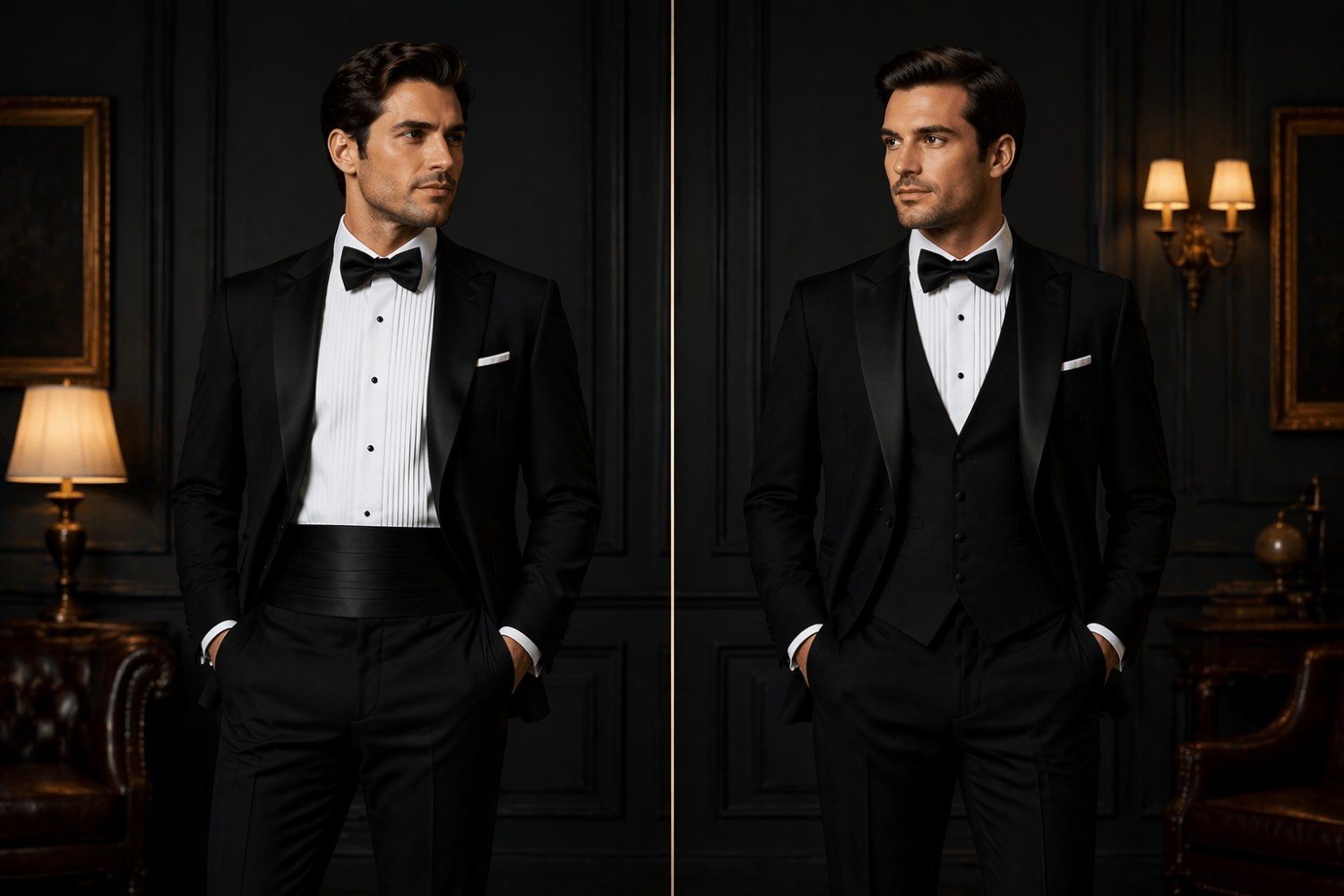
When putting together a tuxedo, one question often comes up: should you wear a cummerbund or a waistcoat? Both accessories sit around the waist and help create a clean transition between the shirt and the trousers. They serve a similar purpose but create very different looks.
A cummerbund keeps the outfit simple and minimal. A waistcoat adds structure and layering under the jacket. The choice affects how formal the outfit feels, how comfortable it is during the event, and how the tuxedo appears when the jacket is open.
This decision becomes especially important when styling wedding tuxedo suits, where the overall appearance should remain polished throughout the ceremony and reception.
What Is a Cummerbund?
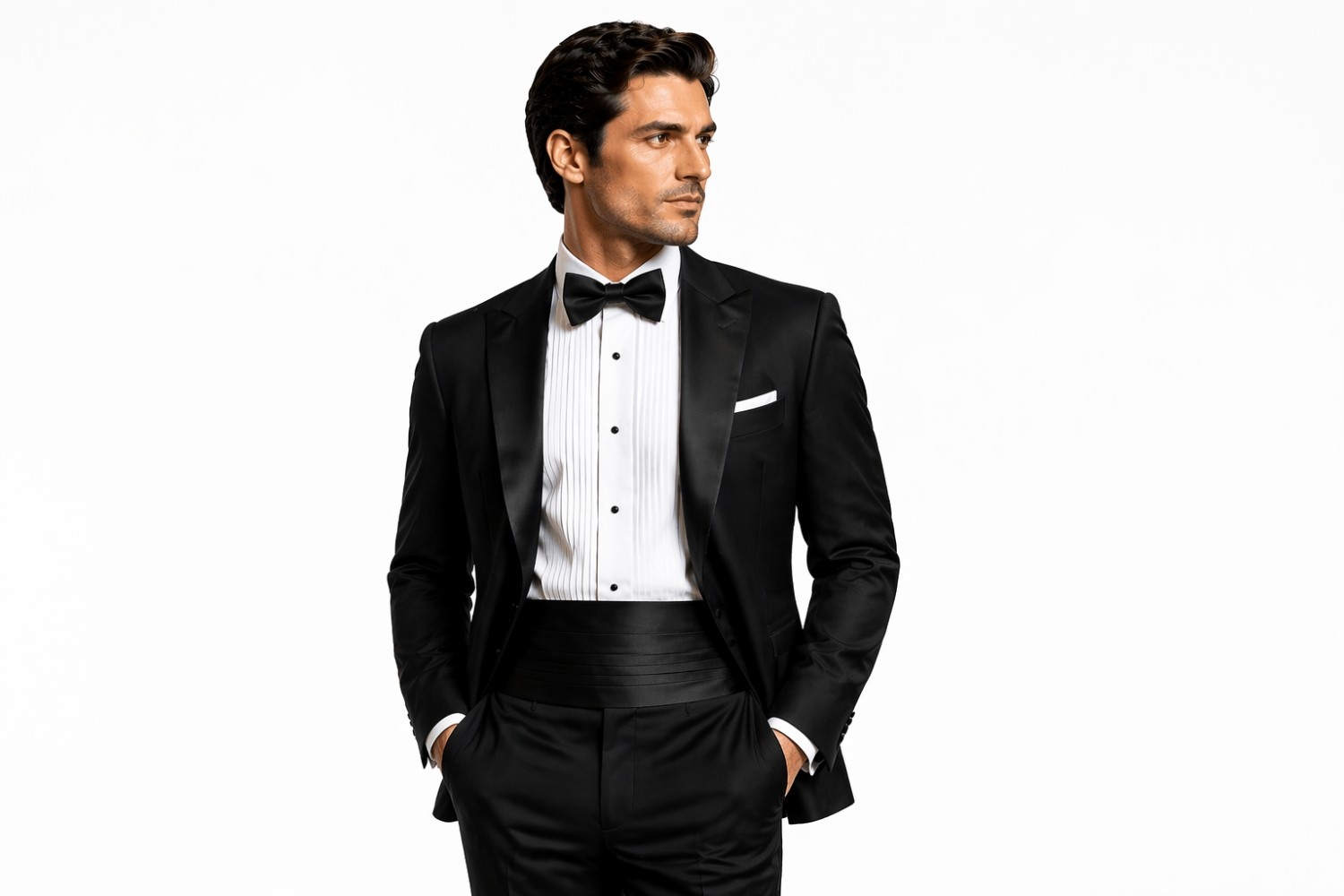
A cummerbund is a pleated sash worn around the waist with a tuxedo. It sits between the shirt and trousers and covers the waistband area. This helps keep the front of the outfit looking neat and uninterrupted.
Cummerbunds became popular in black-tie attire during the nineteenth century and remain a traditional part of formal attire. Most cummerbunds are made from silk or satin, so they match the lapels of the tuxedo jacket.
They are most commonly worn with single-breasted tuxedos and paired with a bow tie. Because of their simple design, they create a clean and balanced look without adding extra layers.
What Is a Waistcoat?
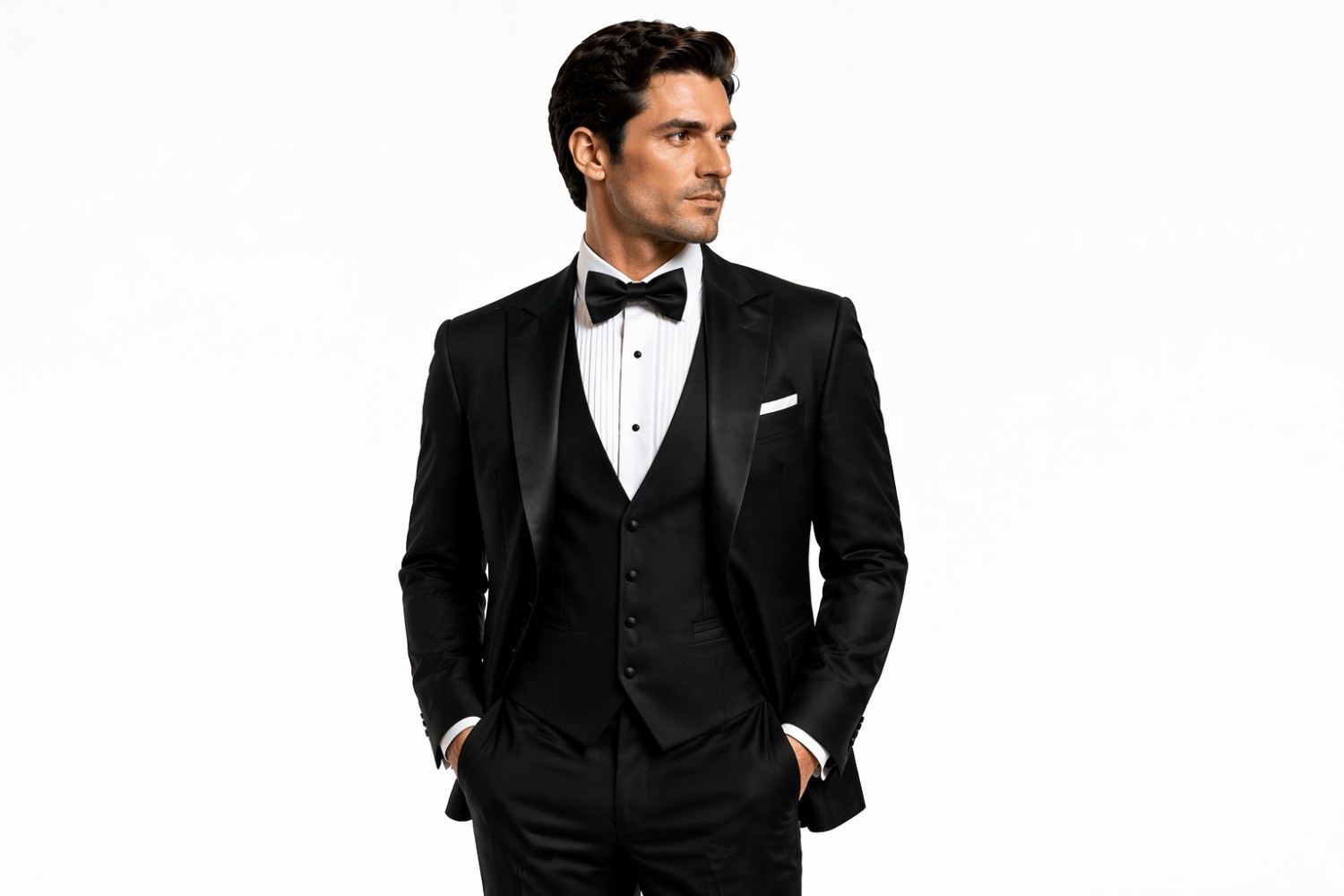
A waistcoat, also known as a formal vest, is a sleeveless garment worn under the tuxedo jacket. It covers both the waist and part of the torso, creating a layered appearance.
Formal waistcoats are designed differently from regular suit vests. They are cut lower in the front to reveal the shirt front and bow tie, and they are often made from the same fabric as the tuxedo jacket.
A waistcoat gives the tuxedo a more structured appearance and keeps the outfit looking complete even when the jacket is unbuttoned.
Cummerbund vs Waistcoat: Quick Comparison
| Feature | Cummerbund | Waistcoat |
|---|---|---|
| Structure | Soft sash | Tailored garment |
| Coverage | Covers waistline | Covers waist and torso |
| Best with | Single breasted tuxedos | Single-breasted tuxedos |
| Comfort | Lightweight | Slightly warmer |
| Visual style | Clean and simple | Layered and structured |
| Common use | Classic black-tie events | Modern formal styling |
Why Tuxedos Need a Waist Covering
In formal dress, the transition between the shirt and trousers should never be visible. Tuxedo trousers sit higher than regular pants, and tuxedo shirts often have decorative fronts.
Without a waist covering, the waistband can appear when the jacket opens or when you sit down. This breaks the clean visual line that formalwear is designed to create.
A cummerbund or waistcoat solves this problem by covering the waistband and keeping the outfit balanced from top to bottom.
When to Wear a Cummerbund
A cummerbund works best when the goal is a traditional black-tie appearance. It keeps the outfit simple and allows the jacket and bow tie to remain the focus.
It is commonly worn at events such as
Black-tie weddings
Formal dinners
Galas
Opera or theater evenings
Because the cummerbund is lightweight and does not add extra layers, many people prefer it for warm evening events or long celebrations.
When to Wear a Waistcoat
A waistcoat offers a more structured look. It works well when the jacket may be open for long periods or when a more layered appearance is preferred.
Waistcoats are often chosen for:
Weddings
Winter formal events
Evening receptions
Occasions where the jacket may be removed
Since the waistcoat covers more of the shirt, it keeps the outfit looking finished even if the jacket comes off during the event.
The Style Factor: Which Looks More Modern?
Both options are appropriate for tuxedos, but they create different visual impressions.
A cummerbund gives the tuxedo a classic black-tie appearance. The design is simple and keeps the focus on the jacket.
A waistcoat creates a fuller look with more structure. Because it adds another layer, many people see it as a more contemporary approach to tuxedo styling.
The choice depends on the style you want to present and the atmosphere of the event.
Fit Rules Many Men Get Wrong
Proper placement of tuxedo accessories is important. Wearing them incorrectly can make the outfit look unbalanced.
A cummerbund should sit at the natural waist and fully cover the trouser waistband. The pleats should face upward, which was originally intended to hold small items such as event tickets.
A waistcoat should fit close to the body without hanging below the jacket button. The bottom of the waistcoat should remain hidden when the jacket is closed.
Only one waist accessory should be worn at a time. Wearing both together is considered incorrect in formal dress.
Double-Breasted Tuxedos Change the Rules
A double-breasted tuxedo usually does not require a cummerbund or waistcoat. The front panels of the jacket overlap and naturally cover the waist area.
Because of this design, the jacket itself already creates the clean line that formalwear requires. Adding another waist accessory can make the outfit look bulky.
For this reason, most traditional black-tie guidelines recommend wearing a double-breasted tuxedo without a cummerbund or waistcoat.
Cummerbund vs Waistcoat for Weddings
Both options appear frequently at weddings, but they create slightly different styles.
A cummerbund is often chosen for traditional black-tie weddings. It keeps the tuxedo simple and formal.
A waistcoat is popular among modern grooms. It adds depth to the outfit and maintains a complete appearance even when the jacket is removed during the reception.
The final choice often depends on the theme of the wedding and how formal the event is expected to be.
Final Decision
Both the cummerbund and the waistcoat serve the same purpose in tuxedo styling. They cover the waistline and help maintain the clean proportions that formalwear requires.
Choose a cummerbund if you want a simple and traditional black tie look. Choose a waistcoat if you prefer a more structured appearance that remains polished even when the jacket is open.
Either option can work well when it is matched with the right tuxedo and worn with a proper fit.

