


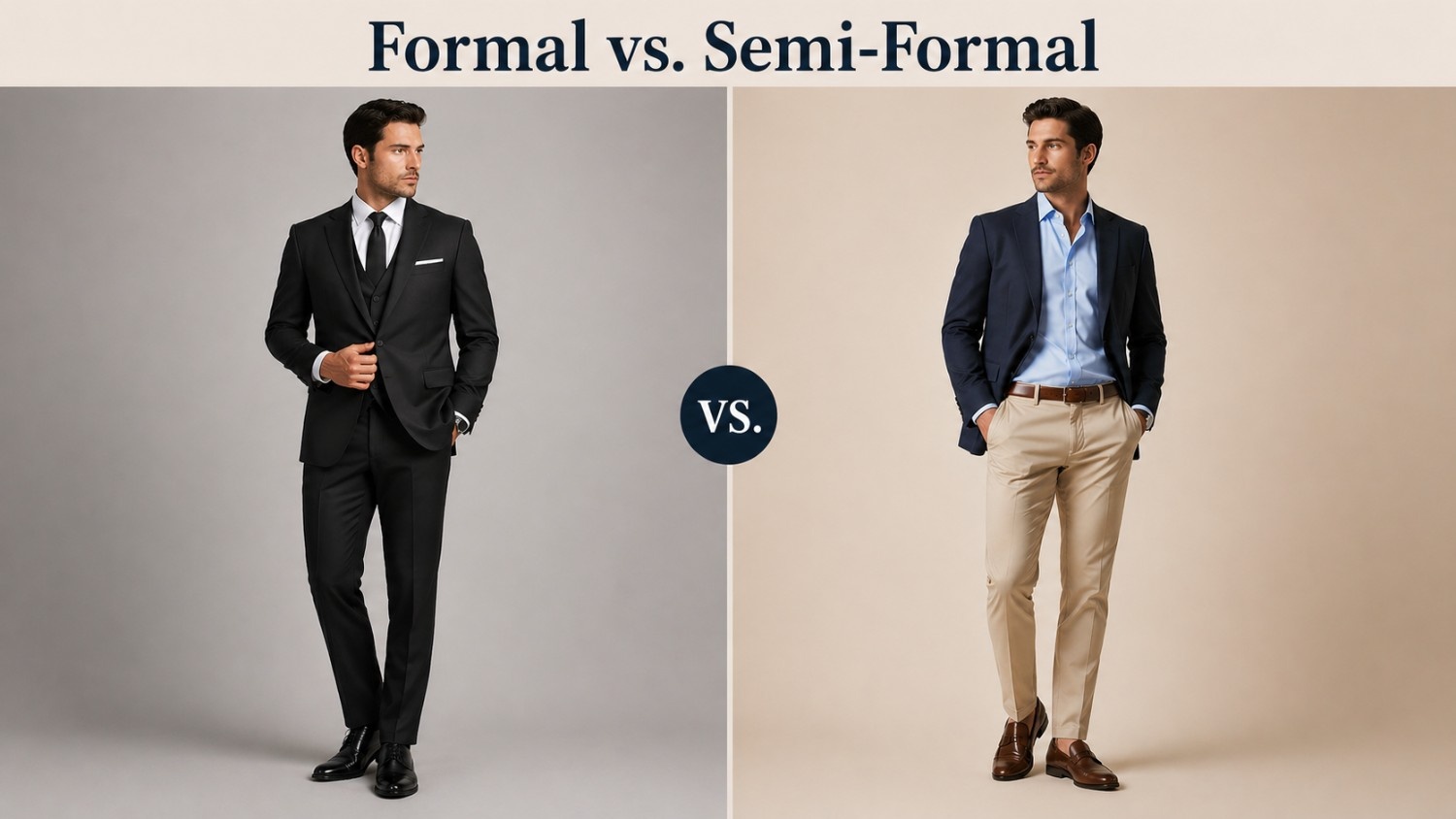
You’ve got an invitation on your kitchen counter. It says “semi-formal,” and suddenly, the contents of your wardrobe feel like a foreign language. Sound familiar?
You’re not alone. The line between formal and semi-formal dress codes trips up even the most stylish men. And given how differently these two codes play out in real life, from the suit you choose to the shoes you tie, getting it wrong isn’t just a minor misstep. It’s the difference between walking into a room with confidence and spending the night second-guessing your reflection.
So here it is: the definitive breakdown of formal attire vs. semi-formal attire for men, what each one actually means, how to nail both, and how to read between the lines when the invitation isn’t entirely clear.
What Is Formal Attire for Men?
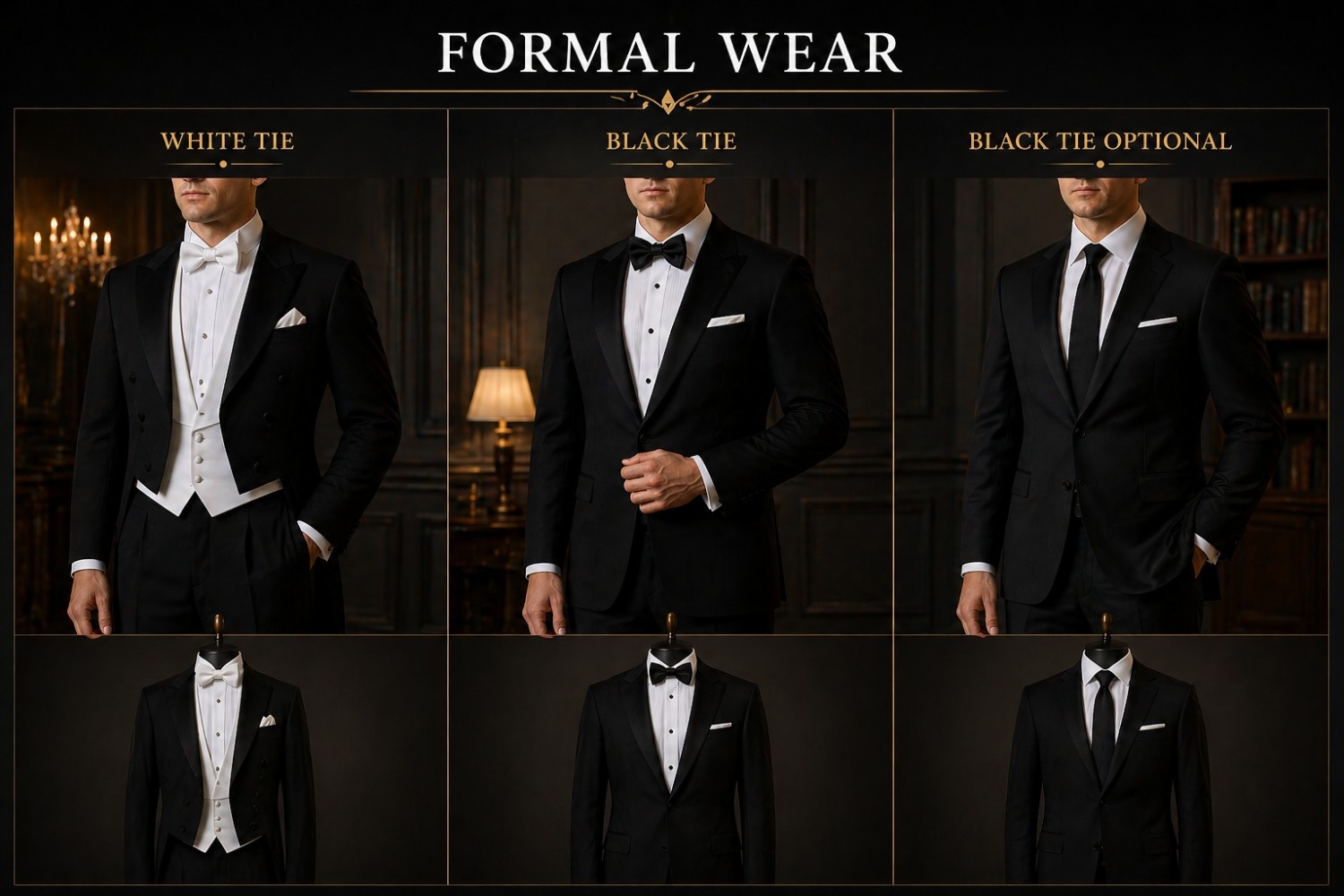
Let’s get one thing straight before diving into comparisons: formal attire and black tie are not the same thing, but they live in the same neighborhood.
Formal wear is the umbrella. It covers everything that sits above semi-formal and casual in the dress code hierarchy. Within that umbrella, you’ll find two well-known subcategories: black tie and white tie. Understanding these will clarify what the “formal dress code for men” actually demands.
White Tie: The Pinnacle of Formal Dressing
White tie is rare and deliberately so. Its roots stretch back to the 18th-century aristocracy, and today it surfaces only at the grandest state dinners, royal events, and ultra-exclusive galas.
For men, the white tie is completely non-negotiable in its requirements:
- A black tailcoat (not a tuxedo jacket, but a full coat with tails)
- A white dress shirt with a stiff bib front
- A white waistcoat
- A white bow tie, always self-tied
- Black dress trousers with a silk braid on the side seam
- Patent leather shoes, immaculately polished
- Optional: white gloves or a white pocket square
There’s no room for creative interpretation with a white tie. This is the dress code where you follow the rules precisely.
Black Tie: The Most Common Formal Dress Code for Men
Black tie is the code most men will actually encounter at weddings, charity galas, award ceremonies, and formal dinners. And while it’s strict, it does allow for a narrow band of personal expression.
The black tie essentials for men:
- A tuxedo (jacket with satin lapels, matching trousers with a silk braid): black is the classic choice, with midnight blue emerging as a sophisticated modern alternative
- A white dress shirt, typically with a bib, pleated front, or marcella fabric
- A black bow tie, preferably self-tied (pre-tied immediately signals you didn’t bother)
- Patent leather Oxford shoes, no exceptions
- A cummerbund or waistcoat: either works, though both together is overkill
- Optional: white pocket square, silver cufflinks
One point worth drilling home: when an invitation reads “Black Tie Optional”, it doesn’t mean casual Friday is acceptable. It means a tuxedo is preferred, and a well-cut dark suit is the only respectable alternative. Don’t use that “optional” as a green light to show up underdressed.
What Does a Formal Dress Code for Men Look Like Beyond Black Tie?
Outside of black-tie events, “formal” more broadly refers to occasions like high-end weddings, sophisticated fundraisers, prestigious dinners, and certain corporate events. The formal dress code for men in these contexts typically means:
- A dark suit in charcoal, navy, or deep midnight tones
- A crisp white dress shirt
- A conservative tie in silk, with a solid or subtle pattern
- Black or dark brown Oxfords, mirror-polished
- Minimal, understated accessories: think cufflinks and a plain pocket square
The key principle behind formal wear is restraint. Colors stay dark and elegant. Patterns are kept minimal. The overall silhouette should communicate refinement without any visual noise.
Get Custom-Made Formal Attire
What Is Semi-Formal Attire for Men?
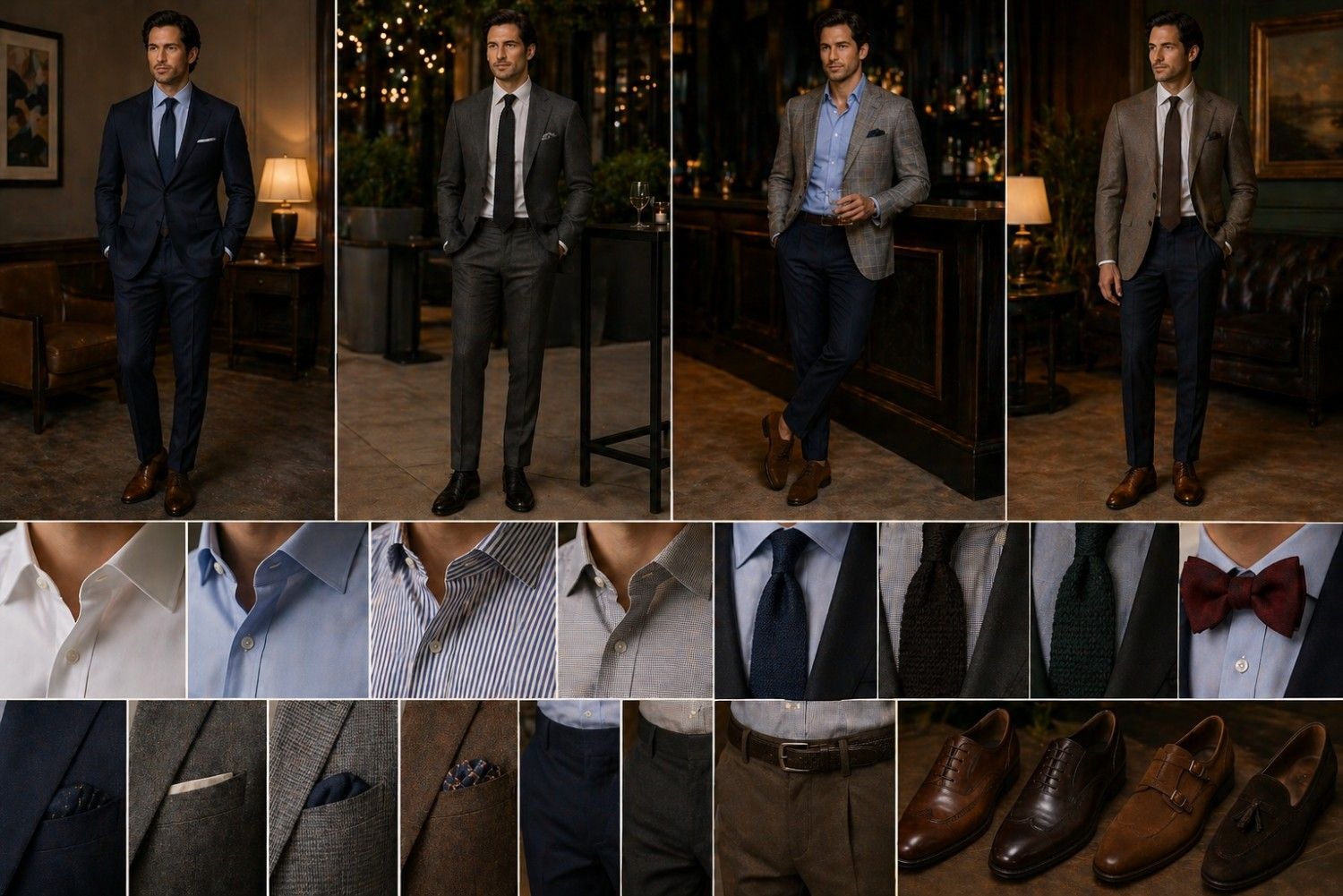
Semi Formal Attire For Men
Here’s where things get interesting and more forgiving.
Semi-formal attire occupies the space between business casual and full formal wear. It’s the dress code for cocktail parties, certain weddings, holiday office parties, fundraiser dinners, and evening social gatherings where you want to look genuinely sharp without arriving in a tuxedo.
The core of any semi-formal outfit for men rests on four pillars: a suit or blazer, a dress shirt, appropriate trousers, and polished shoes. But unlike formal dressing, semi-formal gives you actual creative latitude within those pillars.
The Suit: Your Semi-Formal Foundation
A well-fitted two-piece suit is the safest and most versatile semi-formal choice. Navy, charcoal, and grey are the timeless go-tos, but semi-formal doesn’t punish you for reaching toward lighter shades, earthy tones, or even subtle patterns like a fine check or slim pinstripe.
A few important rules:
- Fit is everything. A mediocre fabric in a perfectly tailored cut will always beat an expensive suit that doesn’t fit. Get your suit adjusted if necessary.
- A blazer with tailored trousers is a legitimate alternative to a matching suit; just ensure the pieces feel intentional, not mismatched.
- Avoid three-piece black suits at semi-formal events, as they read as too formal for the occasion.
The Dress Shirt
White and pale blue remain the safe, enduring choices, and there’s a reason they’ve lasted. Both complement every suit color without competing for attention. That said, semi-formal is the place where a subtle pattern (thin stripes, fine checks) or a muted solid color can work beautifully.
Keep the collar clean and structured. Avoid anything that reads casual: no jersey fabrics, no loud prints, and no open-collar flannels.
To Tie or Not to Tie?
Unlike formal events, a tie at semi-formal occasions is often expected but not always mandatory. A lot depends on the specific event, the time of day, and how the rest of your outfit is put together.
Evening events: lean toward wearing a tie, as it adds the finishing formality the setting demands. Daytime occasions: you can often skip the tie if the rest of the outfit is sharp enough.
A silk tie, a textured knit tie, or even a bow tie in a non-black color all work in the semi-formal space. Just avoid the bow tie at more relaxed gatherings, as it can tip the outfit into over-formal territory.
Footwear: Where Men Most Often Get It Wrong
For semi-formal occasions, you have real options, and this is one area where most guides undersell the flexibility:
- Oxford shoes: the go-to for evening events and more elevated settings
- Derby shoes: slightly more casual than Oxfords, perfect for daytime
- Loafers: excellent for summer events, garden parties, or relaxed cocktail settings
- Chelsea boots: works especially well in autumn and winter semi-formal contexts
- Brogues: add texture and personality without breaking formality
Keep whatever you wear polished and in good condition. Scuffed shoes undermine an otherwise excellent outfit.
Accessories: Your Personal Signature
Semi-formal is the zone where accessories stop being just finishing touches and start being genuine style statements. Cufflinks, a pocket square, a slim belt, and a tasteful watch: all of these help you express personality while keeping the outfit elevated.
Mix colors thoughtfully. A navy suit with a burgundy pocket square and brown shoes is a combination that reads confident and considered. Just resist the urge to layer too many things at once; one or two strong accessories make a better impression than five competing ones.
Get Custom-Made Semi-Formal Attire
Formal vs. Semi-Formal: The Side-by-Side Breakdown
Still fuzzy on the differences? Here’s the clearest way to see them laid out:
| Formal | Semi-Formal | |
| Core garment | Tuxedo or dark formal suit | Two-piece suit or blazer + trousers |
| Shirt | White dress shirt (often with stiff bib) | White, pale blue, or subtle-pattern dress shirt |
| Tie/neckwear | Black bow tie (black tie events) or silk tie | Tie optional but recommended; more variety allowed |
| Shoes | Patent leather Oxfords | Oxfords, Derbies, loafers, brogues, Chelsea boots |
| Accessories | Minimal, understated: cufflinks, white pocket square | More personality allowed: watches, colorful pocket squares, textured ties |
| Color palette | Dark and restrained: black, navy, charcoal | Broader: navy, grey, earthy tones, lighter shades in daytime |
| Fit tolerance | Impeccable tailoring required | Tailored fit essential, but more flexibility in silhouette |
| Events | Black-tie galas, white-tie ceremonies, formal weddings | Cocktail parties, semi-formal weddings, dinner parties, work events |
Decoding the Dress Code Language on Invitations
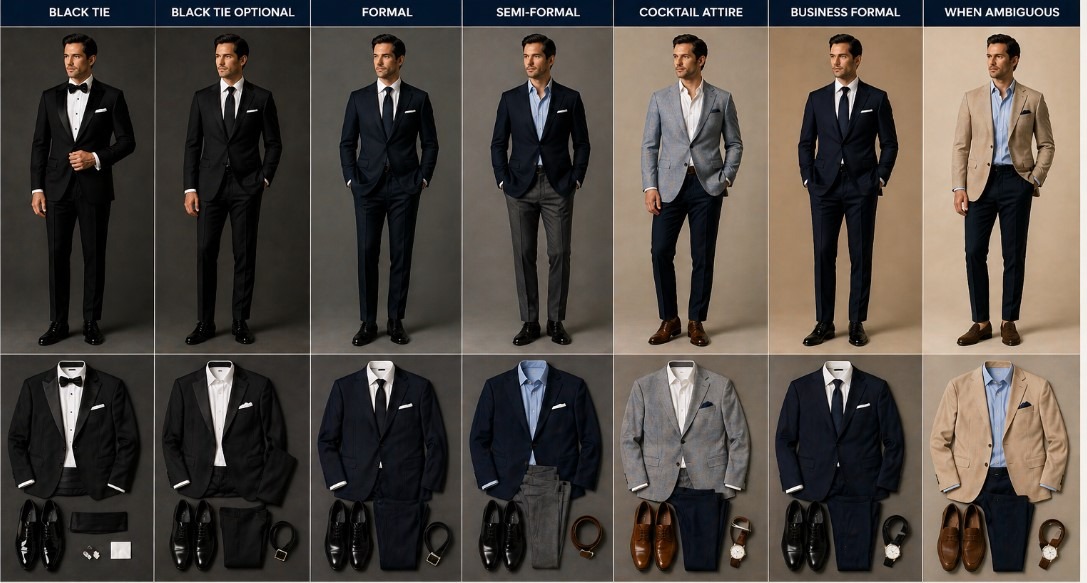
This is the practical intelligence most guides skip: the actual translation of what invitation wording means.
“Black Tie” → Tuxedo. No substitutions, no negotiations.
“Black Tie Optional” → Tuxedo strongly preferred. A dark, well-fitted suit is the only acceptable alternative. Don’t treat “optional” as permission to dress casually.
“Formal” → Dark suit at minimum; tuxedo welcomed and appropriate.
“Semi-Formal” → A sharp two-piece suit or blazer-and-trousers combination. No jeans, no polo shirts, no sneakers.
“Cocktail Attire” → Sits between semi-formal and formal. A suit is expected; lighter colors and more personality are welcome compared to full formal events.
“Business Formal” → Navy or charcoal suit, conservative tie, dress shirt: essentially the working world’s version of formal.
When the wording is ambiguous, always check the venue and time of day. An evening event in a hotel ballroom demands a darker, dressier response than an afternoon garden party.
Seasonal Considerations: Fabric Matters as Much as Style
One dimension that most men overlook when decoding either dress code is fabric choice, and it matters enormously for how the outfit actually looks and feels in real life.
Spring/Summer formal and semi-formal: Reach for breathable options like linen, cotton, or lightweight wool blends. These fabrics keep you comfortable without sacrificing the structured look the dress code demands. For formal summer events, a pale linen-cotton blend suit threads the needle between elegance and wearability. Colors can shift lighter: soft greys, tan, muted blues.
Autumn/Winter formal and semi-formal: This is the season for heavier wool, flannel, and cashmere blends. Textures come into their own in cooler months; subtle herringbone, fine houndstooth, and windowpane checks all add depth without breaking the code. Colors naturally shift darker: charcoal, midnight navy, deep burgundy.
The rule of thumb: match your fabric weight to the season, and always let the venue guide your color palette.
Quick-Start Formulas: Outfits That Work Every Time
Sometimes you just need a dependable starting point. Here are proven combinations that hit the mark without overthinking:
Formal Event (Dark Suit Version)
Charcoal three-piece suit → White dress shirt → Silk navy tie → Black Oxford shoes → Simple cufflinks + white pocket square
Formal Event (Black Tie)
Midnight blue tuxedo → White pleated dress shirt → Black self-tied bow tie → Patent leather Oxfords → White pocket square
Semi-Formal Event (Evening)
Navy two-piece suit → White dress shirt → Burgundy silk tie → Dark brown Oxford shoes → Tan pocket square + matching watch
Semi-Formal Event (Daytime/Summer)
Light grey suit → Pale blue dress shirt → No tie → Tan Derby shoes → Navy pocket square
Semi-Formal Event (Winter)
Charcoal flannel blazer + tailored dark trousers → White dress shirt → Textured knit tie → Chelsea boots → Warm-toned pocket square

