


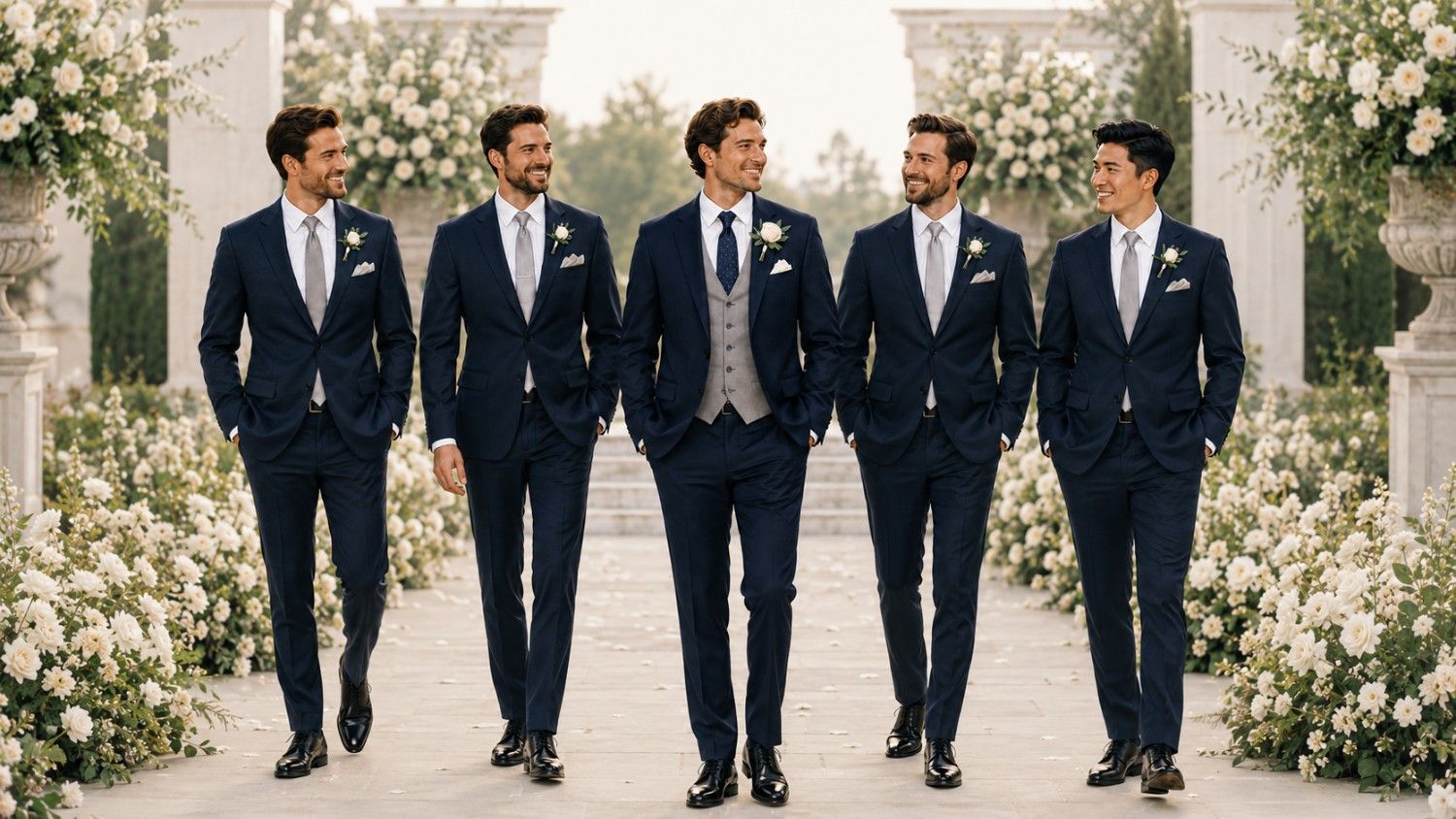
Getting the groom and his groomsmen to look cohesive (but not identical) is one of those things that sounds straightforward until you’re actually staring down a dozen suit options and a colour palette that somehow has to work with dusty rose bridesmaid dresses. We get it. That’s why we’re breaking it all down.
Whether you’re the groom doing the planning, the best man trying to wrangle the group, or someone who just got a text saying, “We’re all wearing navy,” this guide covers everything you need to know.
Should the Groom and Groomsmen Wear the Same Suit?
Not exactly, no. The whole point is that you should be able to look at the wedding party and immediately know who’s getting married. That’s the groom, and he should look it.
That doesn’t mean he needs to show up in a completely different outfit. It means there should be at least one clear, intentional difference between what he’s wearing and what the guys are wearing. Think of it the same way you’d think about the bride and her bridesmaids: they complement each other; they don’t compete.
A good rule of thumb: one or two visible differences are all you need. Go beyond that, and it starts looking less like a coordinated wedding party and more like a group of guys who got dressed at different hotels.
Start Here: Lock In the Overall Vibe First
Before anyone picks a colour or a lapel style, get clear on the big picture. The formality of your wedding should drive everything else.
Black tie at a ballroom? Tuxedos across the board for both the groom and the groomsmen.
Outdoor garden ceremony in June? A lightweight suit in a warm neutral works beautifully.
Casual backyard wedding? Dress shirts and slacks are totally fine. A full tuxedo in your parents’ backyard would be a choice, but probably not the right one.
Once you know the vibe, it becomes much easier to figure out what separates the groom from the group, because you’re already working within a clear framework.
The Color Strategy (This Is Where Most Couples Start)
Color is your most powerful tool here, and there are a few ways to play it.
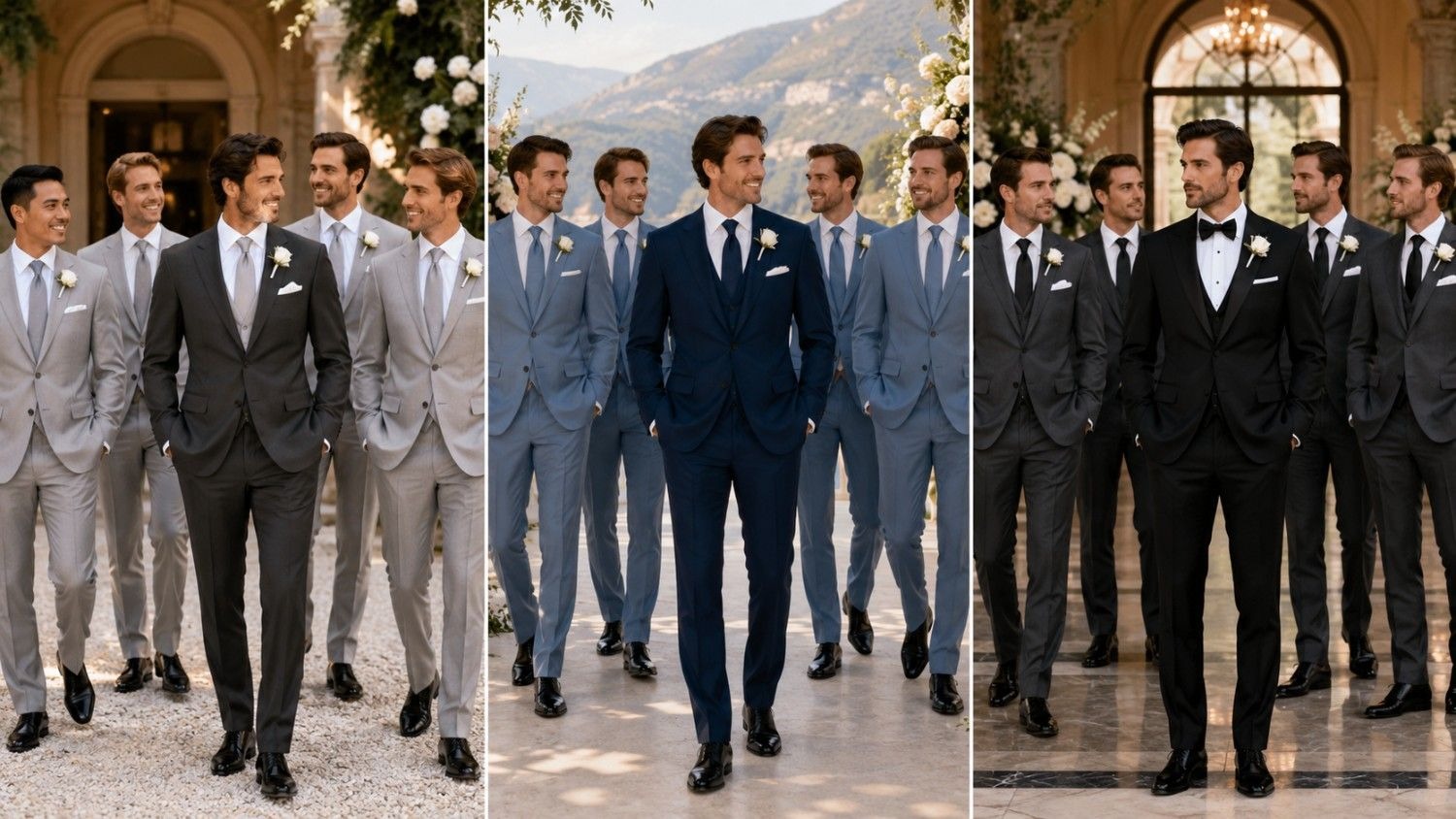
Same Color Family, Different Shade
This is the most classic move and it works every single time. The groom wears a richer, deeper shade; the groomsmen wear something lighter.
- Groom in charcoal gray → Groomsmen in light gray
- Groom in midnight navy → Groomsmen in dusty blue
- Groom in black tuxedo → Groomsmen in dark gray suits
The result: everyone looks cohesive in photos, and the groom is unmistakably the focal point.
Groom And Groomsmern Colors
Same Suit, Different Details
Maybe the budget doesn’t allow for two completely different looks. No problem. Put everyone in the same suit and let the accessories do the work. The groom wears a different tie, a contrasting pocket square, a lapel pin, or a boutonniere that echoes the bride’s flowers. His groomsmen wear matching accessories that pull from the wedding palette.
It’s a small change that looks big in photos.
The Groom Goes Fully Different
Some grooms want maximum visual distinction, and that’s completely valid. A groom in a white tuxedo jacket with groomsmen in classic black is iconic. A groom in a custom 3-piece navy suit, while the guys are in 2-piece gray works just as well. The key is that the looks still feel like they belong at the same wedding. Different doesn’t have to mean disconnected.
Let the Groomsmen Mix-and-Match
This is a more modern approach that works especially well for laid-back weddings. Each groomsman wears what works for him (different colours, different styles), but everyone’s tied together by a single matching element: the same tie, the same boutonnière, or the same pocket square. The group looks intentionally eclectic rather than accidentally mismatched.

Get Your Wedding Suit
How the Groom Can Stand Out (Even in the Same Color)
Colour isn’t the only differentiator. Here are some of the most effective ways to make the groom’s look clearly distinct:
Add a vest. A 3-piece suit on the groom, while the groomsmen wear a 2-piece suit, is one of the cleanest ways to create visual hierarchy. Same colour, totally different silhouette.
Switch up the lapel. Groomsmen in notch lapels, groom in a peak lapel. It’s a subtle detail that photography picks up beautifully.
Different neckwear. Groomsmen in matching long ties, the groom in a bow tie (or vice versa). Even just a different colour within the same tie style does the job.
A boutonniere that’s actually different. If the groomsmen have simple greenery, give the groom something that directly echoes the bride’s bouquet. It’s a meaningful visual connection and a clear marker of who’s getting married.
Custom fit. This one’s underrated. A groom in a perfectly fitted custom suit will look different in photos than groomsmen in off-the-rack pieces, even if the colour is the same. The drape, the shoulder, the trouser break: it all shows up on camera. If you want to see what a truly well-fitted groom’s suit looks like, wedding suits for groom made to your exact measurements make that difference immediately obvious.
Coordinating with the Bridesmaids’ Dresses
You’re not just coordinating the groom and groomsmen. You’re also thinking about how the whole wedding party looks together. The groom’s suit doesn’t need to match the bridesmaid dresses, but it should sit in the same colour temperature (warm tones with warm tones, cool tones with cool).
Here are some pairings that photograph well together:
| Bridesmaid Color | Groom & Groomsmen Suits |
|---|---|
| Dusty rose / blush | Navy or charcoal |
| Sage green | Warm gray or tan |
| Burgundy / wine | Deep navy or dark charcoal |
| Royal blue | Medium gray or black |
| Champagne / ivory | Light gray or navy |
| Terracotta | Olive, tan, or dark gray |
| Lavender | Charcoal gray or deep navy |
When in doubt, navy and charcoal are the safest bets. They pair with almost every bridesmaid color and look sharp under any lighting.
The Mistakes Worth Avoiding
Matching too perfectly. If the groom is identical to his groomsmen, he gets lost in the group. That’s not what anyone wants.
Ignoring venue formality. A tuxedo at a casual outdoor wedding looks out of place. A linen blazer at a black-tie reception looks underdressed. Let the venue set the level.
Sourcing suits from different rental shops. “Same color” from two different suppliers rarely means the same color in real life. Stick to one source.
Forgetting the full look. Suits can match perfectly and then one groomsman shows up in brown dress shoes while everyone else is in black. Communicate the complete outfit: shoes, belt, tie. Not just the jacket and trousers.
Choosing style over comfort. It’s a long day. A groomsman who’s uncomfortable in his suit will carry that in photos. Fit and fabric breathability matter as much as aesthetics.
The Quick-Reference Checklist
| Groom | Groomsmen | |
|---|---|---|
| Suit color | Richer / darker shade | Lighter or neutral |
| Pieces | 3-piece (with vest) | 2-piece |
| Lapel | Peak lapel | Notch lapel |
| Tie | Different color or style | Matching |
| Boutonniere | Echoes bride’s bouquet | Simple bloom or greenery |
| Pocket square | Contrasting, statement fold | Coordinating, simple fold |
| Fit | Custom / made-to-measure | Well-tailored |
| Shoes | Dress shoes (all coordinated) | Matches groom’s direction |
The groom-groomsmen look is one of the few parts of wedding planning where you have near-total control, and the results are permanent (hello, wedding photos forever). Start with the groom’s suit, build the group look around it, and keep the differences intentional. Even small tweaks read clearly on camera.
And if you want the groom’s look to be genuinely stand-out, not just slightly different, a custom suit built to your exact measurements is the move. Explore custom wedding suits for groom and see how much of a difference the right fit actually makes.

