



A wedding tuxedo should look balanced when you stand naturally and allow enough movement for the day ahead. You should be able to walk, sit, greet guests, and enjoy the reception without constantly adjusting your jacket or trousers.
Good fit comes from how the garment’s proportions work together. A jacket can fasten and still sit poorly at the shoulders. Trousers can have the correct waist measurement yet feel restrictive through the seat or thighs.
This guide explains how to assess your wedding tuxedo, recognise concerns worth discussing with your maker, and check the complete outfit before your wedding.
How Should a Wedding Tuxedo Fit?
A well-fitting wedding tuxedo should sit cleanly across the shoulders, rest neatly against the shirt collar, and close without pronounced pulling. The sleeves should reveal a little shirt cuff, while the trousers should stay at the intended waist position and allow comfortable sitting and walking.
The aim is a controlled silhouette with enough room for movement. A close fit can work well, but tightness is not evidence of good tailoring.
When exploring custom wedding tuxedos, consider your preferred proportions alongside the fabric, colour, and lapel. Explain how you want the outfit to fit before production begins.
Unsure What Your Tuxedo Fit Needs?
Tell us where ready-made jackets or trousers usually feel restrictive, loose, or out of proportion. We’ll help you understand your custom fit options.
Discuss My Tuxedo FitWedding Tuxedo Fit Checklist
Use this table for a first assessment, then examine each area more closely.
| Area | What to Look For | What Deserves Attention |
|---|---|---|
| Shoulders | A smooth transition from shoulder to sleeve. | Persistent dents, collapsing, or restriction. |
| Collar | The jacket collar rests against the shirt collar. | A noticeable gap while standing naturally. |
| Chest and Lapels | The front sits neatly without obvious strain. | Lapels pushed outward or persistent chest tension. |
| Waist | The jacket closes with a balanced shape. | Strong pulling around the fastening. |
| Jacket Length | Front and back look proportionate to your body. | A length that makes the outfit appear unbalanced. |
| Sleeves | A small amount of shirt cuff remains visible. | Sleeves covering your hands or excessive cuff exposure. |
| Trouser Waist and Seat | The waistband stays in place and sitting feels comfortable. | Slipping, digging, or persistent pulling. |
| Trouser Hem | The fabric meets the shoes neatly. | Excessive bunching or an unintended cropped appearance. |
1. Start With the Shoulders
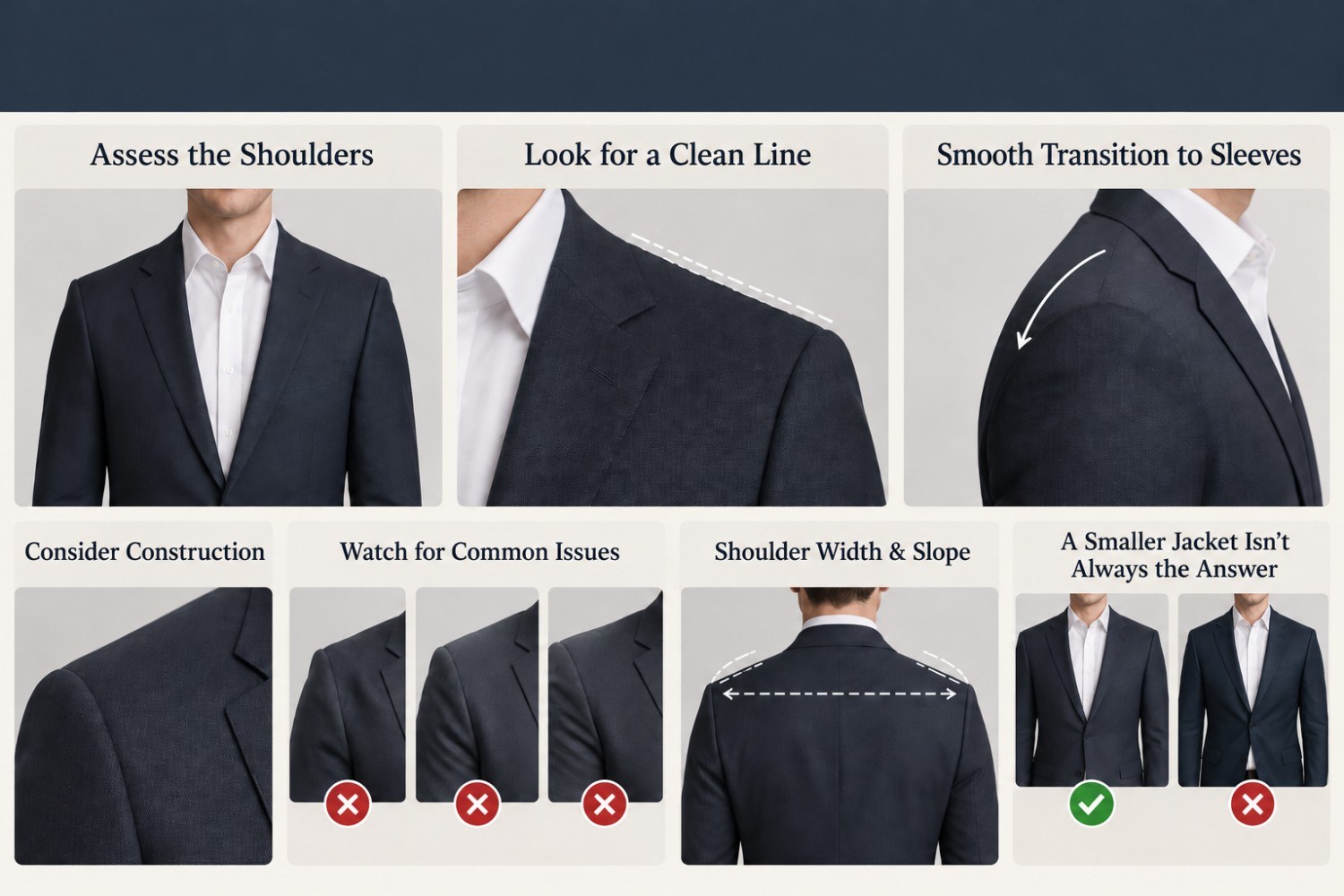
The shoulders establish the upper shape of the jacket. Assess them with your arms relaxed at your sides.
Look for a clean line across the top and a smooth transition into the sleeves. The precise position of the seam depends partly on the jacket’s construction and intended silhouette, so avoid treating one seam position as a universal rule.
Persistent dents below the shoulder, unsupported fabric, or restriction across the upper body deserve attention. Shoulder width and shoulder slope both influence how the area sits.
Do not assume that choosing a smaller jacket will resolve every shoulder concern. It may introduce tightness elsewhere.
For a closer explanation of visible warning signs, read our guide to common shoulder fit problems in suits.
2. Check the Collar in Your Natural Posture
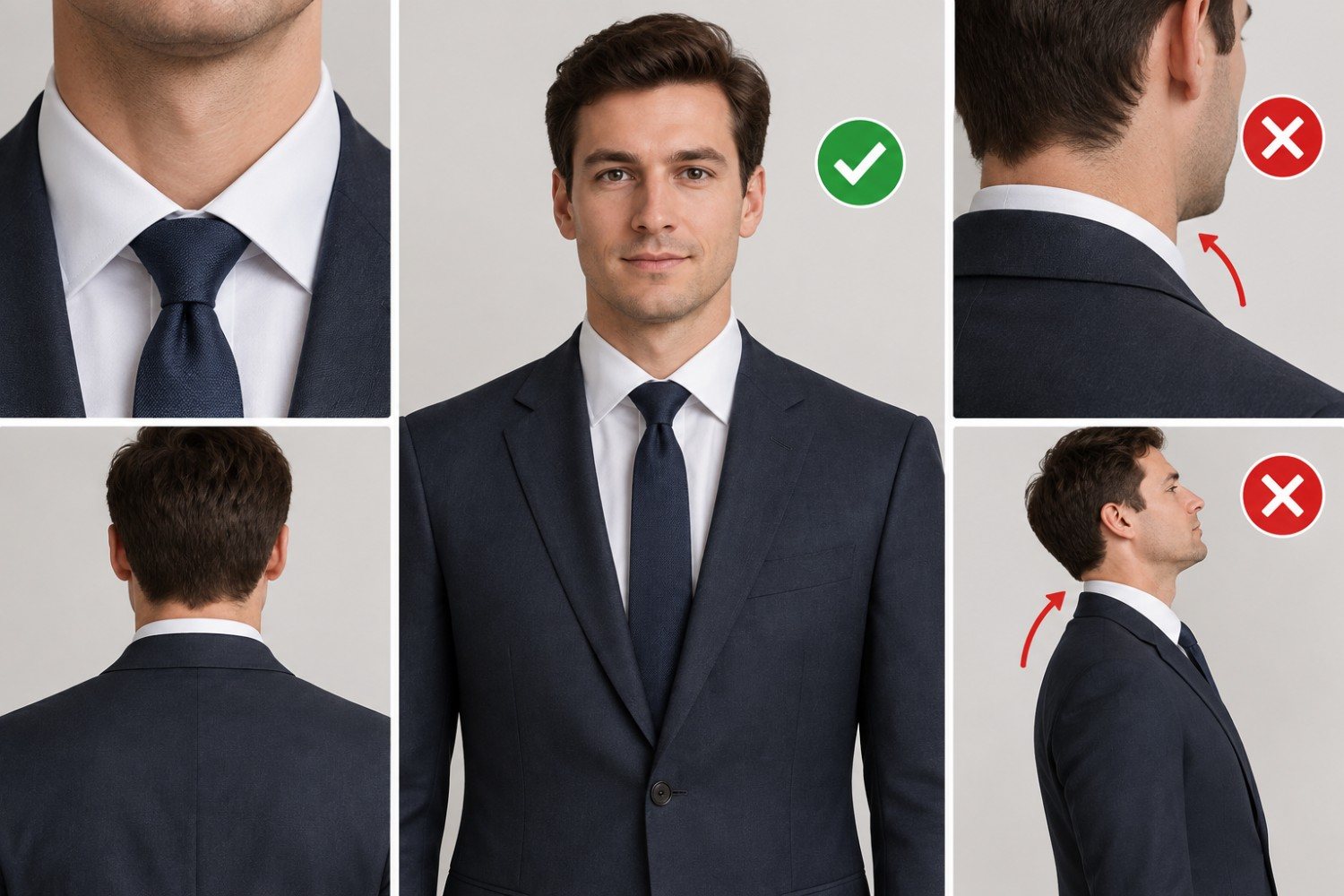
The jacket collar should rest neatly against your shirt collar while you stand normally.
If there is a visible gap behind your neck, resist the temptation to pull your shoulders back or lift your chest to make it disappear. The garment needs to work with the posture you actually use.
Collar position is affected by the relationship between the jacket and your posture. A gap does not necessarily mean the entire jacket is too large.
First, straighten the shirt and let the jacket settle. If the gap remains, photograph it and explain when it appears. A concern visible at rest is different from fabric moving briefly when you reach forward.
3. Assess the Chest, Lapels, and Jacket Waist Together
Fasten the jacket as intended for its design and look at the front.
The lapels should sit neatly, following their intended roll. The chest should have enough space without appearing unsupported. Around the fastening, look for pronounced tension lines or a strong X-shaped pull.
A shaped waist can define the silhouette, but the jacket should not rely on pulling tightly across your body to create that effect. Chest room and waist shaping need to work together.
Check this after taking your hands out of your pockets and relaxing your arms. Holding a pose can disguise tension that becomes obvious during normal wear.
Tell the maker where you feel restriction as well as what you see. For example, “It pulls across my upper back when I reach forward” gives useful context.

4. Judge Jacket Length From the Front and Back
For a traditional silhouette, the jacket generally covers the seat. The final choice also depends on your proportions and the intended design.
Assess the length in a full-length mirror. A jacket that looks appealing in a close-up photograph may appear too short or too long once the trousers and shoes are visible.
Avoid using the position of your fingertips as the only test. Arm lengths vary, and the whole outfit matters more than a single shortcut.
5. Check Sleeve Length With Your Wedding Shirt
With your arms resting at your sides, a common starting point is approximately ¼ to ½ inch of visible shirt cuff.
Check the shirt first. If its sleeves are too long or its cuffs slide over your hands, adjusting the jacket to match could create another problem.
The jacket sleeves should also allow ordinary arm movement without gripping your upper arms. Judge their resting position after lowering your arms again, since sleeves naturally move when you reach.
Wear the actual shirt and cufflinks you plan to use when making the final assessment.
6. Check Trouser Waist, Rise, and Seat
Tuxedo trousers should remain at their intended waist position without digging in or repeatedly slipping.
The rise determines how the waistband and crotch relate to your body. Wearing trousers lower than intended can change the appearance of the seat, leg, and hem.
Check them while standing and sitting. You should have enough room through the seat and thighs for normal movement. Persistent pulling, discomfort around the crotch, or excessive loose fabric under the seat should be discussed with the maker.
These areas interact. Tightness around the seat may involve the rise or hip room, rather than the waistband alone.
Empty your pockets before assessing the silhouette. A phone or wallet can distort the fabric.
7. Choose Trouser Length With Your Shoes On
The trouser “break” is the fold created where the hem meets the shoe.
A slight break offers a restrained appearance, while no break creates a cleaner, shorter line. The choice depends on your preferences, trouser width, and shoes. Avoid treating one option as correct for every groom.
Look for an intentional finish. Several folds accumulating above the shoe may indicate excess length, while an unexpectedly high hem may leave more ankle exposed than you wanted.
Walk a few steps and let the trousers settle before deciding. Fabric caught on the calf can make the hem appear shorter than it is.
8. Check the Waistcoat as Part of the Outfit
If your tuxedo includes a waistcoat, assess it with both the trousers and jacket.
It should fasten without pronounced pulling and cover the trouser waistband when you stand naturally. Check that the shirt does not create an unintended gap between the waistcoat and trousers.
If a gap appears, consider both pieces together. The trousers may be sitting lower than intended, or the waistcoat length may need attention.
Put the jacket back on before making a final judgement. The waistcoat should fit beneath it without creating uncomfortable pressure or excessive bulk.
Slim Fit vs a Tuxedo That Is Too Tight
Slim fit describes a silhouette. It should still leave room for the garment to function.
Use a simple distinction:
A Close Fit
Follows your shape while allowing ordinary movement.
An Overly Tight Fit
Creates persistent strain, restriction, or pressure.
An Overly Loose Fit
Leaves excess fabric that obscures the intended proportions.
Do not choose a smaller size simply because you want a modern appearance. Discuss where you prefer a closer line and where you need movement.
Likewise, a relaxed cut can still be well fitted. The important question is whether the shape is intentional and works with your body.
Find the Right Shape for Your Wedding Look
Share your inspiration photos and fit preferences. We’ll help you explore a custom tuxedo shape that suits your wedding.
Explore My Custom Tuxedo OptionsHow to Check Your Wedding Tuxedo at Home
Set aside time for a complete try-on soon after delivery.
- Wear the intended shirt and shoes. Add the waistcoat or other outfit pieces you plan to use.
- Stand naturally. Keep your arms relaxed and your pockets empty.
- Check all sides. Use a mirror and photographs taken from the front, side, and back.
- Walk and sit. Unbutton a single-breasted jacket before sitting.
- Return to a resting position. Notice whether the garment settles back into place.
- Record specific concerns. Describe where pulling, pressure, or excess fabric occurs.
- Contact the maker promptly. Follow the relevant process before arranging alterations.
Practical Fit Tip
Ask someone to photograph you from a few steps away with the camera held level. Close, angled selfies can distort proportions and make it harder to assess the jacket and trousers accurately.
Follow any additional photo instructions supplied by your maker.
What Custom Measurements Can Help Address
Custom ordering gives you an opportunity to discuss proportions before the garment is made.
For a custom groom tuxedo, explain recurring concerns such as a jacket fitting the chest but appearing loose at the waist, or trousers that fit standing up but feel restrictive when seated.
Follow the supplied measurement instructions. Do not subtract from body measurements to request a slimmer appearance. Communicate your preferred fit separately and confirm which adjustments are available for the selected design.
A finished custom garment may still need refinement. Allow time for delivery, a complete try-on, and any agreed adjustments before the wedding.
Get Clear on Your Wedding Tuxedo Fit
Share your wedding date, preferred style, and the fit problems you usually encounter. Our team can explain the measurement process and discuss the available options for your chosen tuxedo.
Frequently Asked Questions
It should follow your shape without pronounced pulling or restricted movement. You should be able to walk, sit, and move your arms normally. A closer silhouette still needs enough room to function.
For a traditional silhouette, it generally should. Assess the overall balance from the front, side, and back rather than relying on one measurement alone.
Approximately ¼ to ½ inch is a common starting point when your arms are relaxed. Check that the shirt itself fits correctly before deciding whether the jacket sleeves need adjustment.
A slight break or no break can both work. Choose according to the trouser cut, shoes, and appearance you prefer. The hem should look intentional without excessive bunching.
No. Fabric folds as you move. Pay attention to persistent pulling or distortion when you return to a natural standing position, particularly when it accompanies discomfort.
Yes. Final adjustments may be necessary after delivery. Try on the complete outfit promptly and discuss concerns with the maker before arranging independent work.

